Production Process
Infant Nest Production Process

Infant Nest Production Process

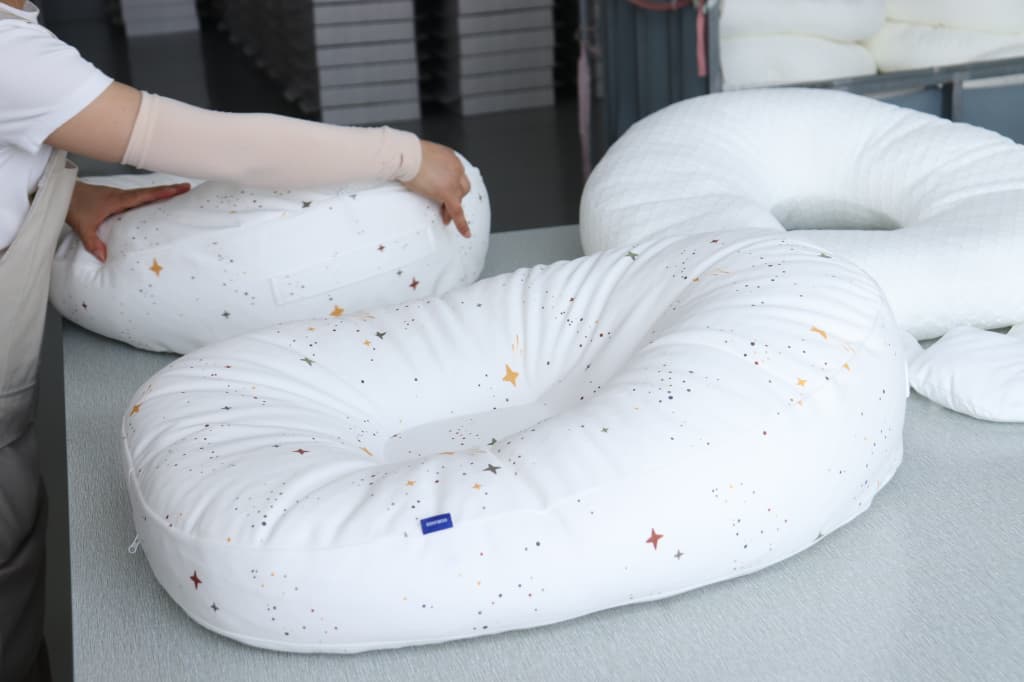
Every infant nest begins with careful sample development and moves through material inspection, precision cutting, sewing, filling, quality checks, needle detection, and packaging. By controlling every step, we help ensure comfort, safety, consistency, and reliable quality for babies and parents.
How We Make It

Our Manufacturing Steps

Sample Making
01

Sample Making

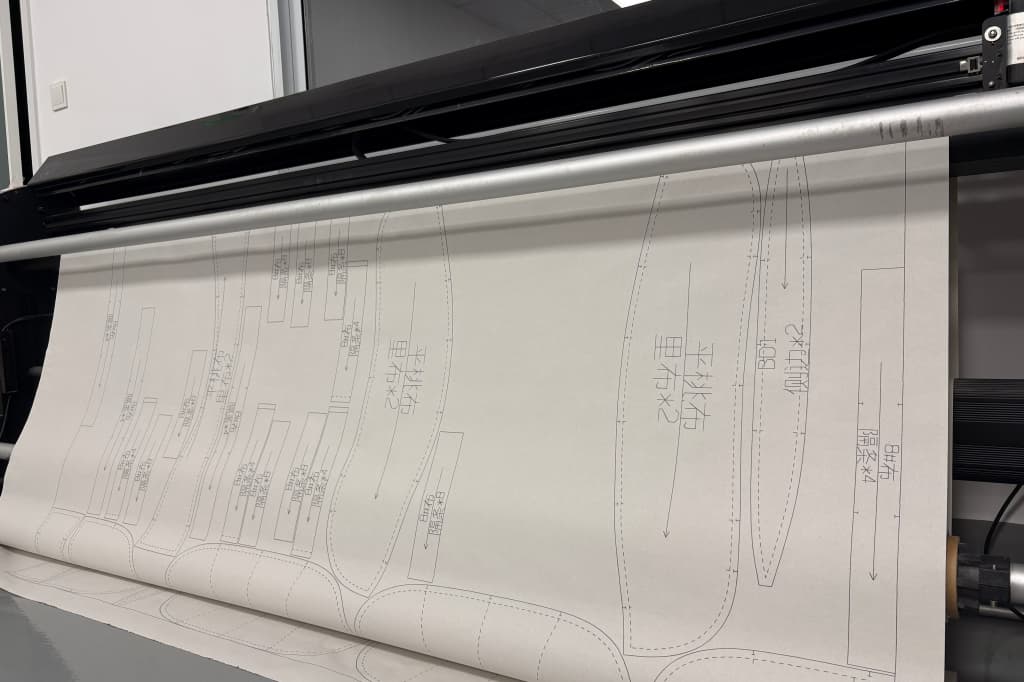
We create CAD patterns and samples based on the customer’s required dimensions, thickness, and packaging specifications. During development, we also evaluate material utilization, production efficiency, and manufacturing stability to ensure a smooth transition to mass production.
SOPs Making
02

SOPs Making

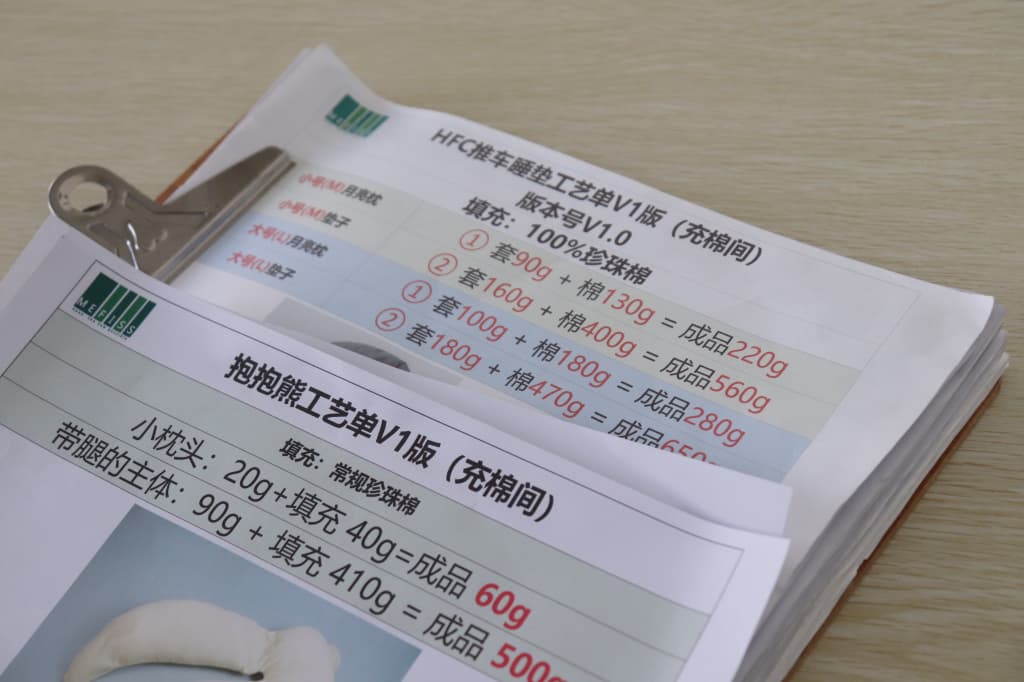
Before production begins, department managers review product specifications, workmanship requirements, and quality standards together. Detailed SOPs are prepared for every production stage to minimize errors and ensure consistent execution.
Material Inspection
03

Material Inspection

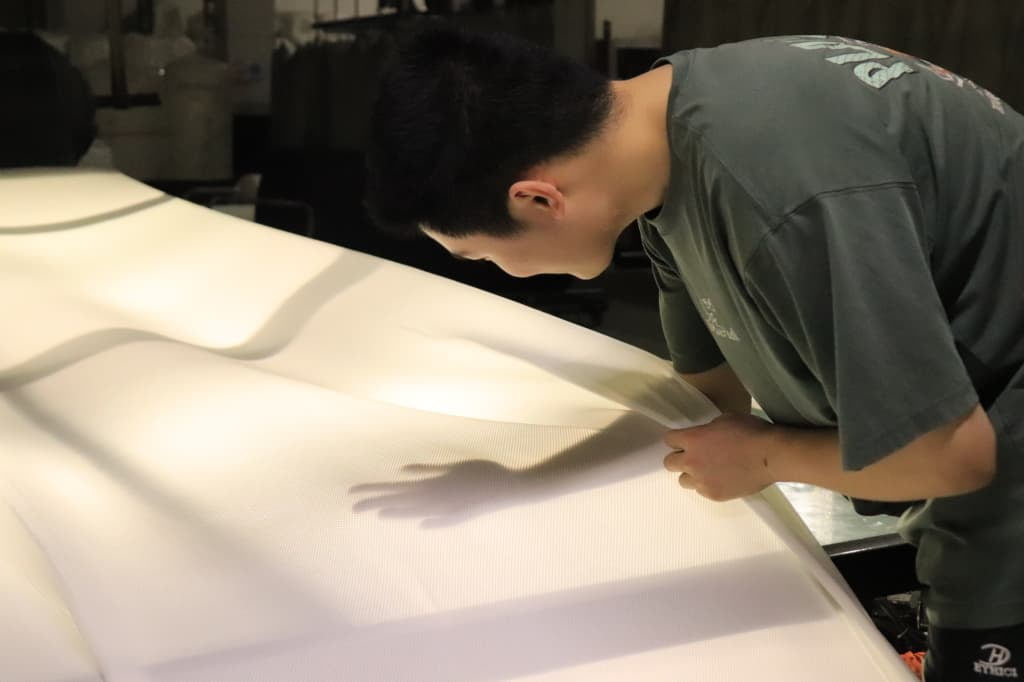
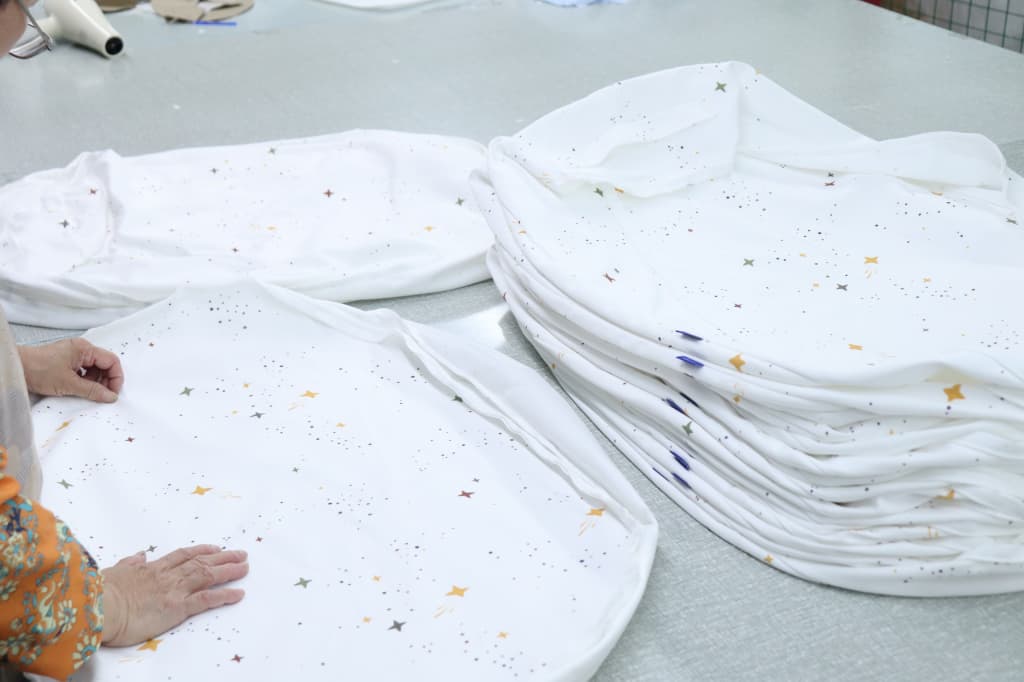
Cotton fabrics may occasionally contain loose yarns, stains, or surface defects. Before cutting, every fabric roll is inspected to ensure it is clean, undamaged, and suitable for production.
Cutting
04

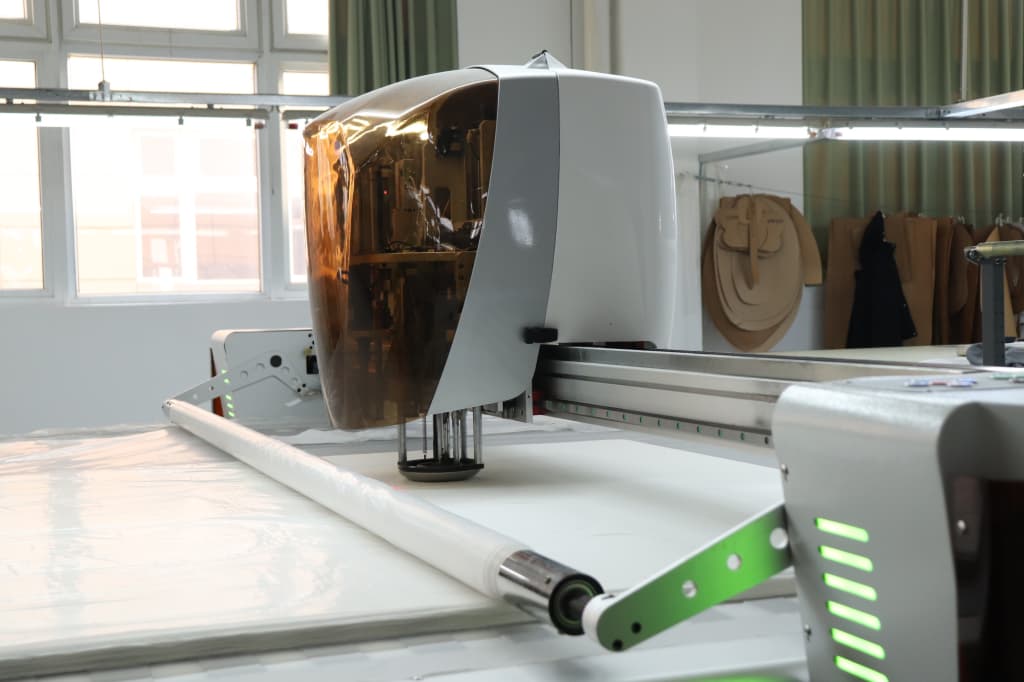
Cutting

Approved patterns are provided to the cutting department before production. Because knitted fabrics have greater stretchability, we use automatic cutting machines to improve accuracy and maintain dimensional tolerances within approximately 5mm.
CAD Nesting
05

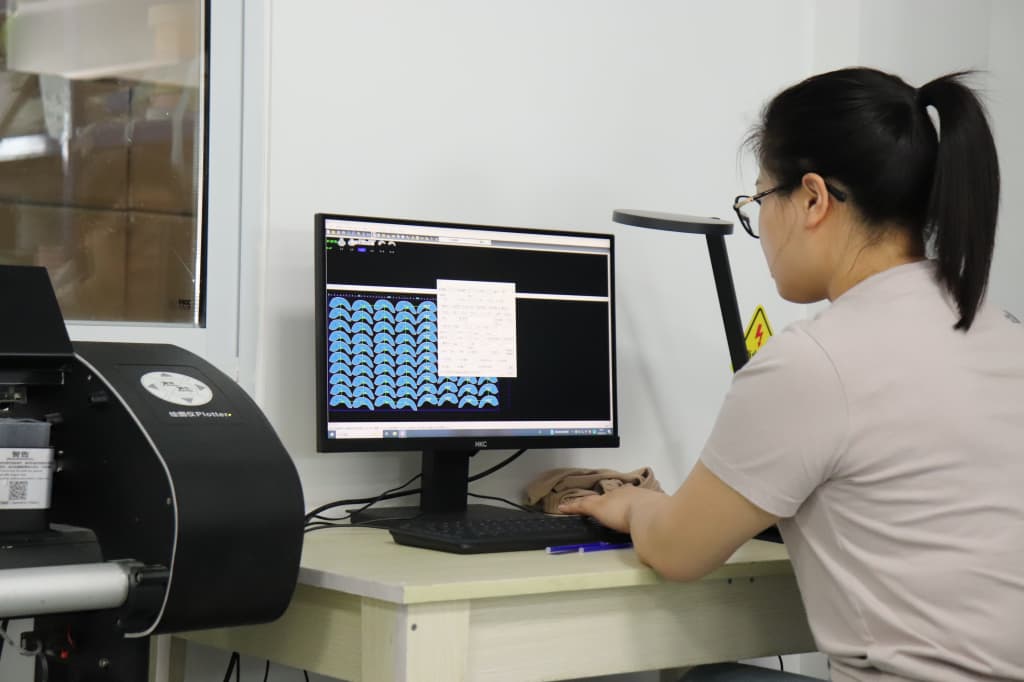
CAD Nesting

Before bulk cutting, we use CAD software to optimize marker layouts. By combining large and small pattern pieces efficiently, we maximize fabric utilization and reduce material waste.
Cut Panel Inspection
06

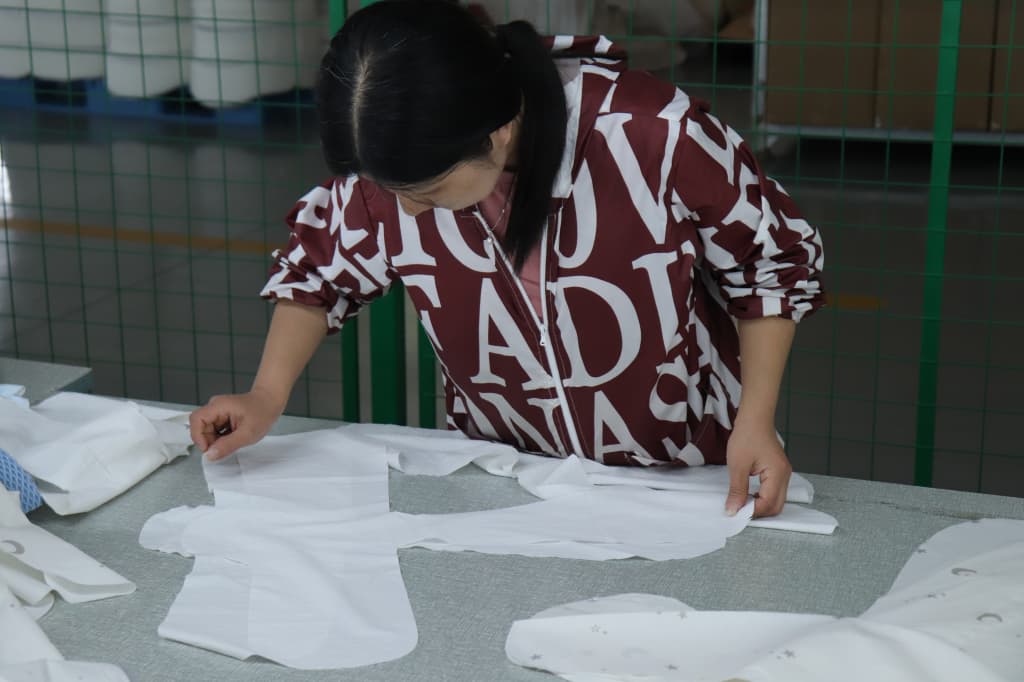
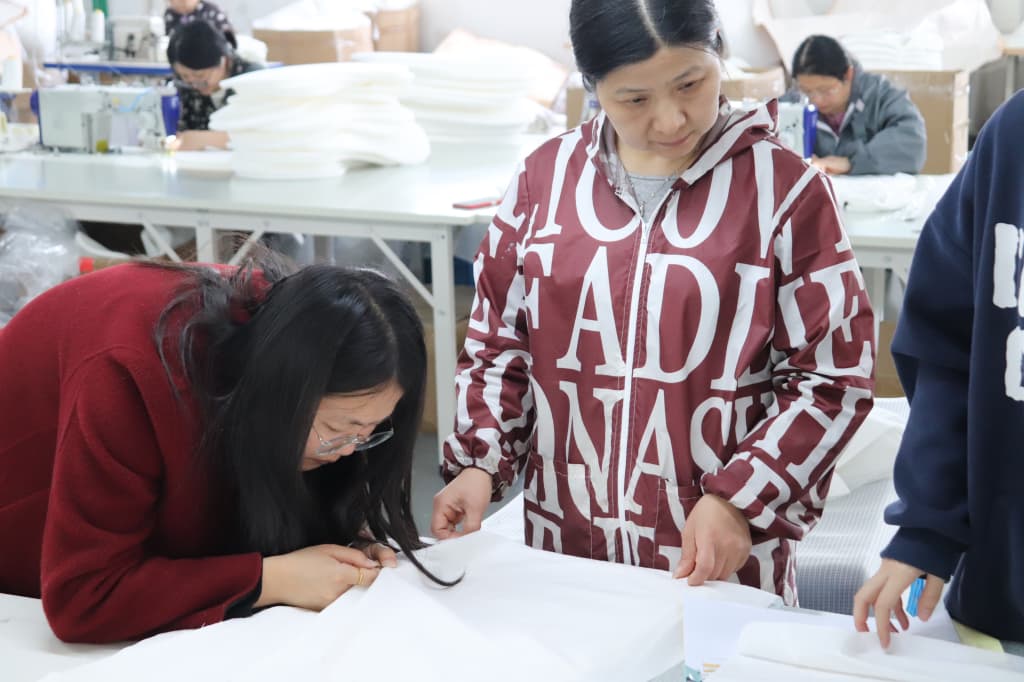
Cut Panel Inspection

Every cut panel is inspected individually after cutting. Any defective, stained, damaged, or incorrectly cut components are removed before sewing begins to avoid downstream quality issues.
Sewing
07

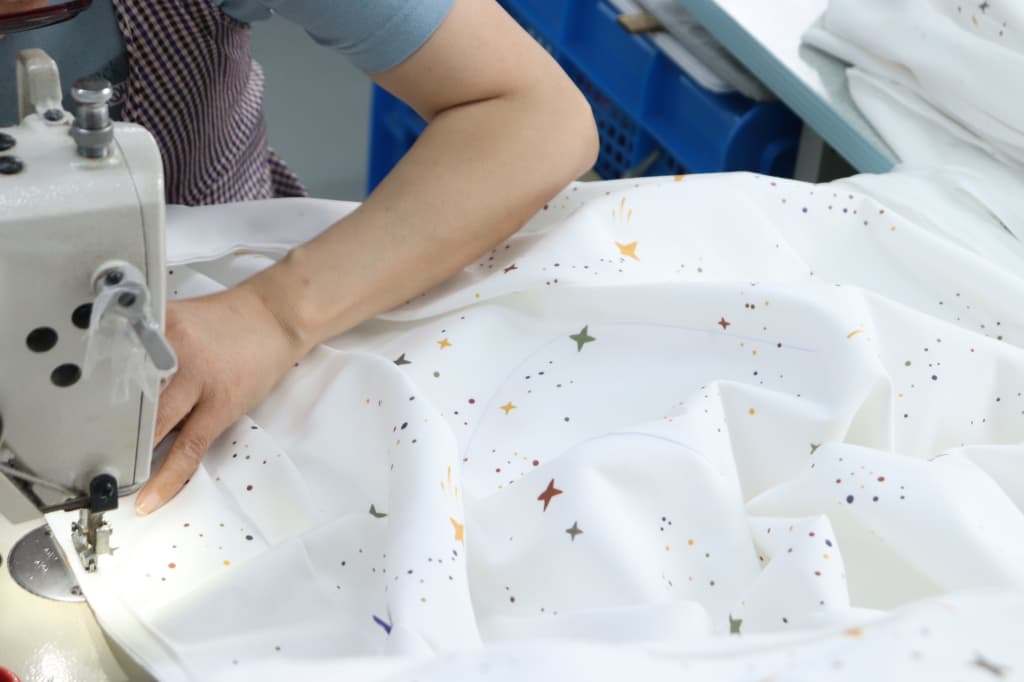
Sewing

The sewing process is divided into specialized operations such as overlocking, binding, zipper installation, and inner cushion assembly. This approach improves efficiency while allowing operators to master specific tasks. Experienced team leaders continuously monitor workmanship and quality standards.
Template Sewing
08

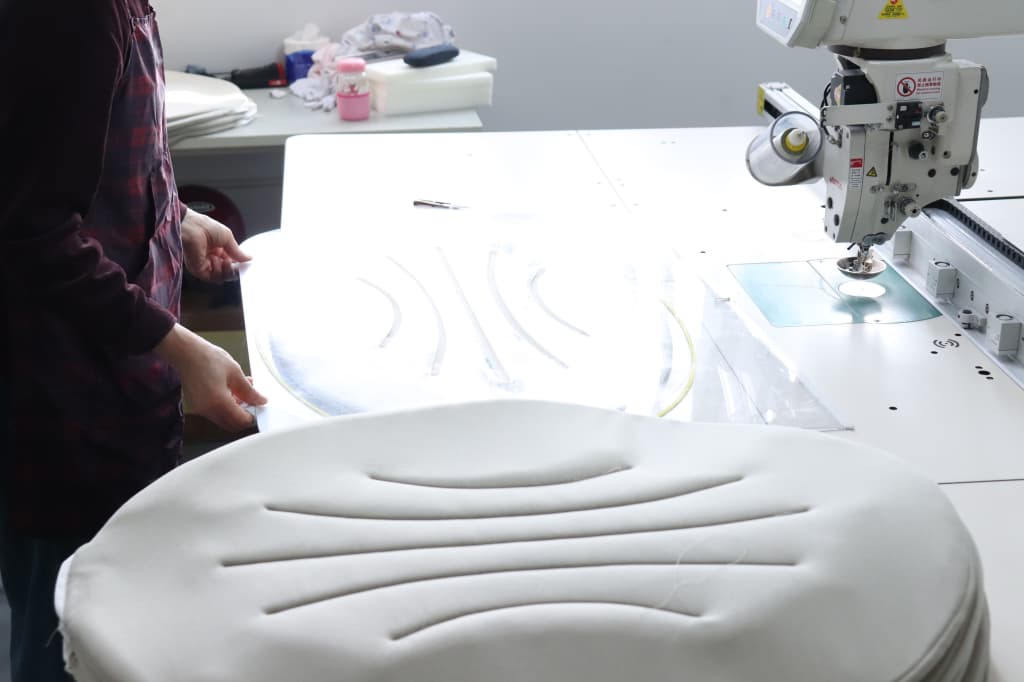
Template Sewing

The infant nest features a semi-circular center section that requires precise stitching. To ensure consistency across large production runs, we use template sewing machines with 360-degree needle rotation for highly stable and repeatable results.
In-Process Inspection
09

In-Process Inspection

Our technical supervisor and production manager conduct inspections three times daily to identify and resolve issues quickly. In addition, the sales team performs an extra daily inspection to ensure production proceeds smoothly.
Filling
10

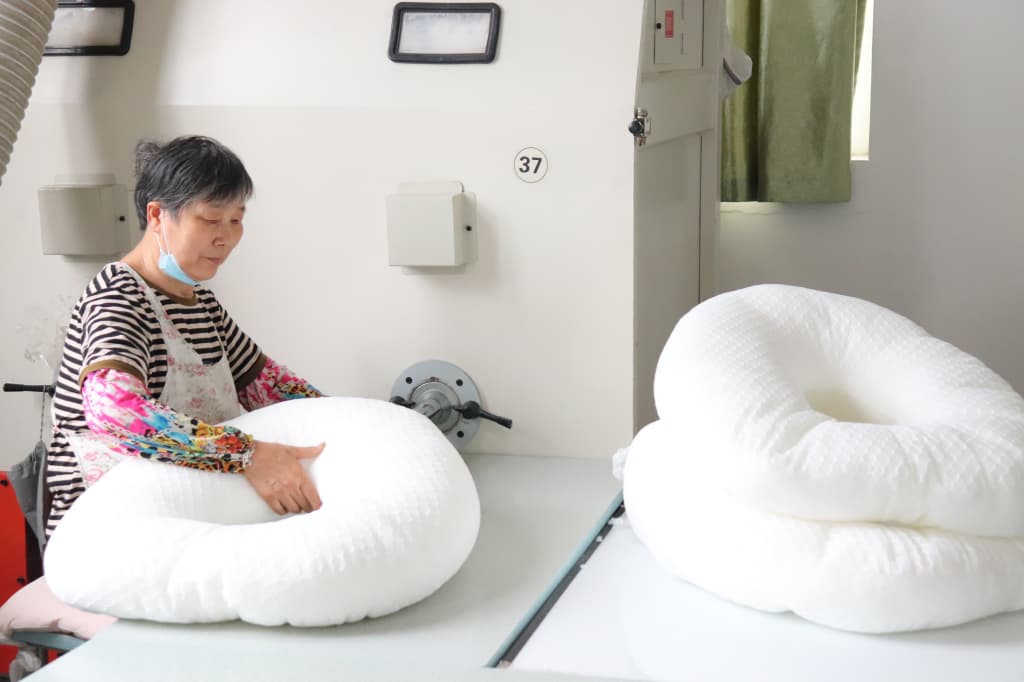
Filling

After sewing is completed, products move to the filling stage. Operators follow detailed filling SOPs, and the first five pieces are reviewed before bulk production continues. If filling density varies between material batches, adjustments are confirmed with the customer.
Weight Check
11

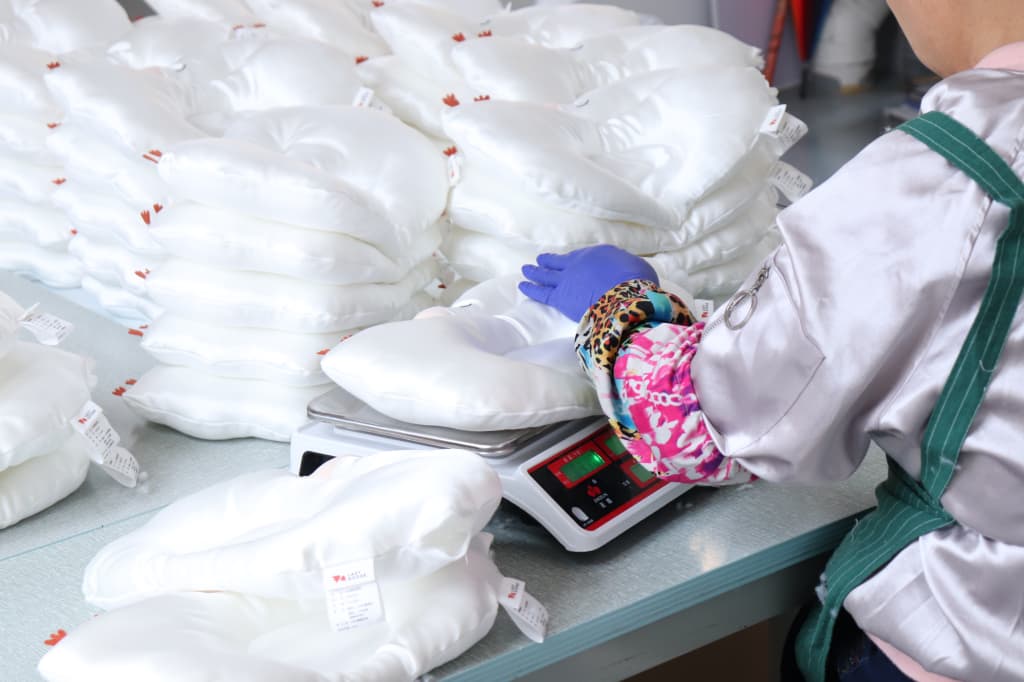
Weight Check

Every infant nest is weighed after filling. Our quality standard requires weight variations to remain within a maximum tolerance of 5 grams to ensure consistent product performance.
Quality Inspection
12

Quality Inspection

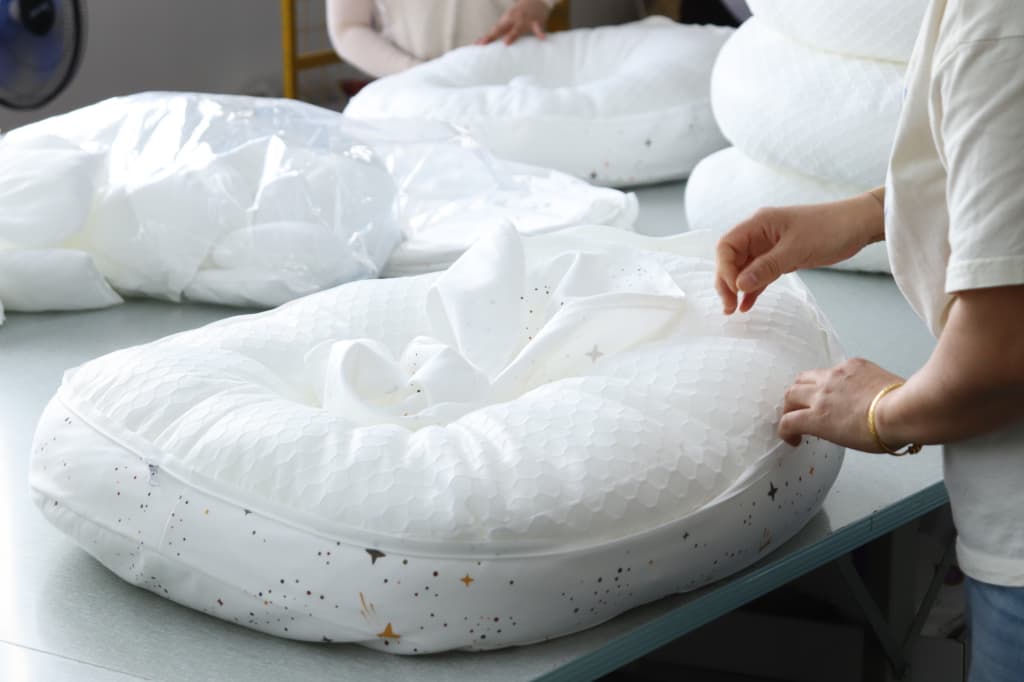
Each product undergoes two independent quality inspections. We verify weight, dimensions, stitching strength, appearance, cleanliness, and overall condition to ensure every product meets our quality requirements.
Vacuum Compression
13

Vacuum Compression

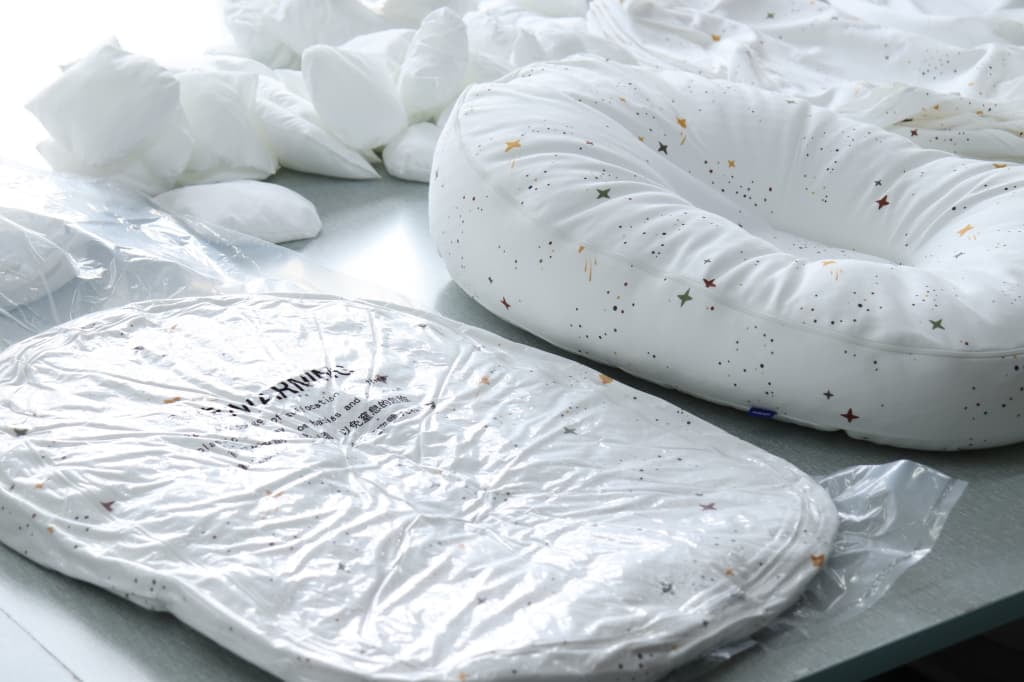
Although the standard product size is approximately 75 × 56 × 20 cm, we offer vacuum compression packaging to reduce shipping volume, helping customers lower ocean freight and Amazon FBA storage costs.
Needle Detection
14

Needle Detection

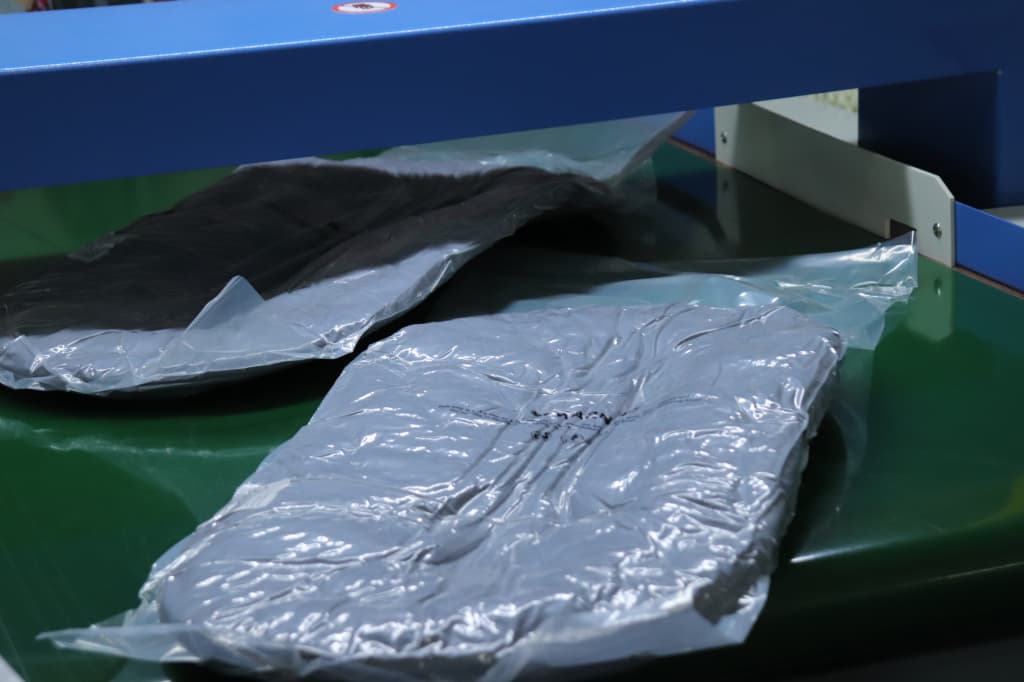
All products pass needle detection before shipment to ensure no broken needle fragments remain inside. We also conduct daily inventories of needles, scissors, tweezers, and other sharp tools, with detailed records maintained for every broken needle incident.
Packing
15

Packing

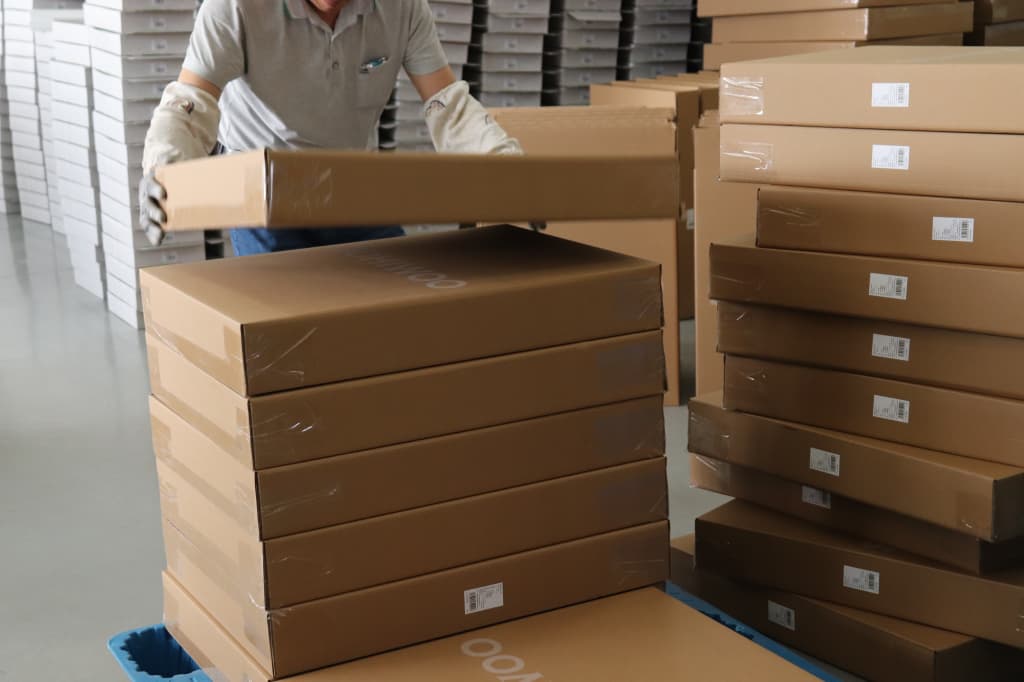
All hangtags, polybags, cartons, and packaging materials are prepared according to standardized packaging SOPs. Packaging takes place in a dedicated enclosed area that is cleaned daily to maintain product cleanliness and packing accuracy.
Shipment
16

Shipment

Before shipment, all export cartons are inspected to ensure they are strong, intact, and suitable for transportation. Delivery vehicles are cleaned and checked before loading to help protect products throughout transit.
Get in Touch

Request a Quote

Tell us your requirements and we'll respond within 24 working hours.

Submitting…