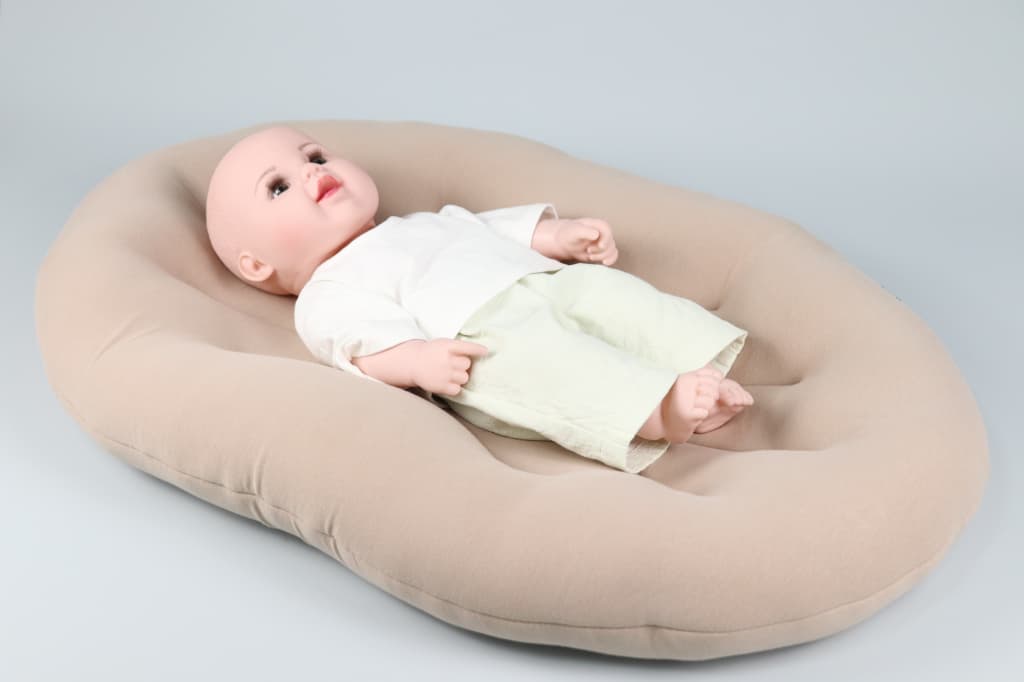
For brands selling baby bed-in-bed products in the United States, product safety compliance involves more than choosing baby-friendly fabrics. Incline limits, product classification, flammability requirements, structural safety and certification documents all need to be considered before mass production.
Baby bed-in-bed products, also known as baby nests or in-bed sleepers, are popular in the infant product market. However, their product structure and intended use can place them under specific U.S. Consumer Product Safety Commission (CPSC) regulations.
For manufacturers and importers, one of the most important steps is identifying which regulations apply to the actual product. A baby nest is not automatically classified as a conventional crib mattress, and the same testing requirements should not be applied to every infant textile product.
At Mefiss Hometex, we support custom baby product development, including material selection, structural adjustments, sample production and coordination with third-party testing laboratories. In this article, we explain the key U.S. compliance considerations for baby bed-in-bed products and how we support brands developing products for this market.
1|Why U.S. Compliance Matters for Baby Bed-in-Bed Products
Baby bed-in-bed products are designed with a compact sleeping or resting area and raised surrounding structures. Depending on their design and marketing, they may fall into different infant product categories under U.S. regulations.
The CPSC identifies baby nests and in-bed sleepers as examples of infant sleep products. A product marketed or intended to provide sleeping accommodation for an infant up to five months old may fall under 16 CFR Part 1236 if it is not already covered by another mandatory infant sleep product standard.
This is particularly important for products sold online. Product names, descriptions, advertised age ranges, photographs and intended uses can all influence how a product is classified.
For example, describing a product as a baby bed, infant sleeper or sleeping nest may indicate that it is intended to provide an infant sleeping accommodation.
Before selecting materials or arranging testing, brands should establish the product’s intended use and regulatory category.
2|Understanding the 10-Degree Incline Requirement
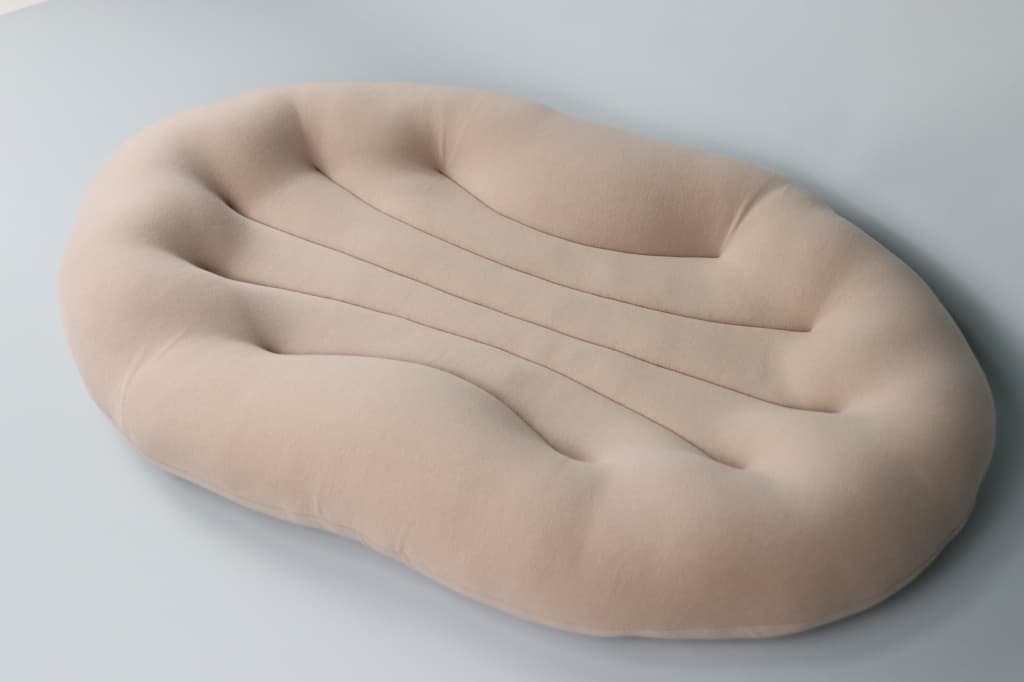
One of the most important safety considerations for infant sleep products in the United States is the angle of the sleeping surface.
2.1|What Is the 10-Degree Limit?
Under the Safe Sleep for Babies Act, inclined sleepers for infants with sleeping surfaces greater than 10 degrees are banned hazardous products in the United States.
In addition, infant sleep products covered by 16 CFR Part 1236 must not have a seat back or sleeping surface angle exceeding 10 degrees.
This requirement is particularly relevant to baby nests and in-bed sleepers that are marketed as sleeping accommodations for young infants.
Key Compliance Point
For an infant sleep product subject to the applicable CPSC requirements, the sleeping surface must not exceed 10 degrees. A product with an inclined sleeping surface greater than 10 degrees may be prohibited from sale in the United States.
2.2|Why Should Manufacturers Check the Actual Product Structure?
A product may appear flat when placed on a table, but its actual sleeping surface can be affected by its construction.
Manufacturers should pay attention to:
- Base structure: Whether the supporting surface remains flat and stable.
- Filling distribution: Whether uneven filling creates raised or depressed areas.
- Side structure: Whether surrounding sections affect the usable sleeping surface.
- Compression behavior: Whether the product maintains its intended structure under the specified testing conditions.
- Assembly: Whether the finished product maintains consistent geometry after all components are assembled.
At Mefiss Hometex, our routine production inspections include product dimensions, thickness, surface flatness and compression recovery. These checks help us maintain manufacturing consistency and identify structural variations during production.
When a U.S. customer specifies an incline-related requirement, we can incorporate the relevant structural inspection points into product development and coordinate the required testing with a third-party laboratory.
3|Flammability Requirements: 16 CFR 1632 and 1633
Flammability is another important consideration for baby bedding and infant sleep products entering the U.S. market.
However, two commonly discussed standards, 16 CFR Part 1632 and 16 CFR Part 1633, are specifically mattress flammability standards. They should not automatically be treated as requirements for every baby bed-in-bed product.
3.1|What Does 16 CFR Part 1632 Cover?
16 CFR Part 1632 is the Standard for the Flammability (Smoldering) of Mattresses and Mattress Pads.
It evaluates a mattress or mattress pad’s resistance to ignition when exposed to a lighted cigarette.
For mattresses subject to this standard, the char length must not exceed 2 inches (5.1 cm) in any direction from the nearest point of the cigarette after testing.
The standard also includes specific testing, labeling and recordkeeping requirements.
3.2|What Does 16 CFR Part 1633 Cover?
16 CFR Part 1633 is the Standard for the Flammability (Open Flame) of Mattress Sets.
It evaluates the fire performance of a mattress or mattress set under a specified open-flame test lasting 30 minutes.
The two main performance criteria are:
| Test Parameter | Requirement |
|---|---|
| Peak Rate of Heat Release | Not more than 200 kW |
| Total Heat Release | Not more than 15 MJ during the first 10 minutes |
3.3|Do All Cotton Baby Bed-in-Bed Products Need These Tests?
No. The material composition alone does not determine whether a product must comply with 16 CFR Parts 1632 and 1633.
The CPSC defines a mattress as resilient material or a combination of materials enclosed by ticking and intended or promoted for sleeping upon. Its guidance also identifies certain juvenile product pads, such as infant carrier and stroller pads, as excluded from the mattress definition.
Therefore, a cotton-covered baby bed-in-bed product should not automatically be treated as a conventional mattress simply because it has a padded or filled structure.
The actual product definition, construction, intended use and applicable exclusions must be reviewed before determining the required flammability tests.
Mefiss Manufacturing Insight
A 100% cotton cover does not automatically make a finished baby product compliant with U.S. flammability regulations. Likewise, the presence of cotton does not automatically mean that a product must use flame-retardant chemicals. Regulatory classification and the applicable finished-product test requirements come first.
4|Baby Bed-in-Bed vs. Infant Sleep Products vs. Infant Support Cushions
Another important issue for U.S. buyers is understanding the difference between products that provide sleeping accommodation and products designed to support an infant during supervised use.
These categories have different regulatory requirements.
| Product Category | Relevant U.S. Regulation | Main Consideration |
|---|---|---|
| Infant Sleep Products | 16 CFR Part 1236 | Sleep surface, structural safety and applicable bassinet/cradle requirements |
| Infant Support Cushions | 16 CFR Part 1243 | Support structure, sidewalls, warnings and other safety requirements |
| Mattresses | 16 CFR Parts 1632 and 1633, as applicable | Smoldering and open-flame performance |
4.1|Infant Sleep Products: 16 CFR Part 1236
Infant sleep products are products marketed or intended to provide sleeping accommodation for infants up to five months old and not already covered by another mandatory infant sleep product standard.
Examples identified by the CPSC include:
- In-bed sleepers
- Baby nests
- Baby boxes
- Compact or travel bassinets
- Infant travel tents
Products covered by this rule must meet the applicable requirements for bassinets and cradles under 16 CFR Part 1218, including the relevant structural and safety requirements.
4.2|Infant Support Cushions: 16 CFR Part 1243
16 CFR Part 1243 establishes a separate safety standard for infant support cushions. The requirements apply to products manufactured after May 5, 2025.
These products include certain infant loungers, positioners and cushions designed to support an infant’s body while reclining or lying down.
The regulation includes requirements covering structural hazards, small parts, sidewall design and warning labels.
Importantly, infant support cushions are not intended to provide a safe sleeping environment. The CPSC advises that they should not be used for infant sleep or naps.
For brands developing baby bed-in-bed products, this distinction is important. A product’s actual function and marketing claims must be consistent with its regulatory classification and intended use.
5|How Material and Product Construction Affect Compliance
Material selection is an important part of baby product development, but compliance is evaluated against the applicable product requirements rather than a single fabric specification.
5.1|Cotton Fabric and Textile Components
Cotton is widely used in baby textile products because of its familiar natural-fiber characteristics and soft fabric hand feel.
For a baby bed-in-bed project, the textile development process may involve:
- Fabric composition and supplier specifications
- Fabric weight and thickness
- Colorfastness and dimensional stability
- Seam construction and stitching strength
- Cleaning and washing requirements
- Applicable chemical safety testing
For brands requesting cotton materials, we can work with specified fabric compositions, colors and construction requirements as part of the product development process.
5.2|Filling Materials and Structural Components
The filling material and internal construction also influence product performance.
For infant textile products, manufacturers should maintain clear specifications for:
- Filling material identification and composition
- Filling weight and distribution
- Internal compartment construction, where applicable
- Seam strength and component attachment
- Finished product dimensions and thickness
A complete Bill of Materials (BOM) helps identify the materials used in each component and supports product documentation and laboratory testing.
6|How We Support U.S. Compliance Development at Mefiss Hometex
We understand that U.S. baby product brands need more than a finished product. They also need a manufacturing partner who can work with their regulatory requirements during product development.
At Mefiss Hometex, we are willing to undertake U.S. CPSC and ASTM compliance development projects.
6.1|Product Structure and Material Adjustments
We can adjust product structures, fabrics and filling specifications according to customer-defined CPSC and ASTM requirements.
For baby bed-in-bed development, this may include reviewing product dimensions, supporting structures, filling distribution, fabric specifications and construction details.
6.2|Sampling and Third-Party Laboratory Coordination
Our team can prepare product samples and coordinate testing with third-party laboratories accepted by the CPSC for the applicable testing requirements.
For projects involving incline or flammability requirements, the relevant product classification and test scope should be identified before samples are submitted.
This helps brands avoid arranging unrelated tests and allows the development team to focus on the actual requirements of the product.
6.3|BOM, Technical Documents and Certification Support
We can provide supporting manufacturing documents, including:
- Bill of Materials (BOM)
- Product drawings and structural specifications
- Material composition information
- Product technical documents
- Sample and testing coordination records
- Supporting information for applicable compliance certificates
- Product labeling and packaging information
For children’s products subject to applicable CPSC rules, the relevant certification is generally a Children’s Product Certificate (CPC). General-use products subject to applicable consumer product safety rules may require a General Certificate of Conformity (GCC).
We can support customers by preparing the necessary manufacturing and technical information for their certification process. The responsible manufacturer or importer must ensure that the applicable certification is issued based on the required testing and compliance evidence.
Our Current U.S. Compliance Experience
We have previously received requests from U.S. customers concerning incline requirements for baby bed-in-bed products. Our routine production inspections cover dimensions, thickness, flatness and compression recovery.
We do not currently have historical 16 CFR Parts 1632 or 1633 submission records or corresponding flammability test reports. We are prepared to develop products according to customer requirements and coordinate the necessary testing with qualified third-party laboratories.
7|FBB-15: A Baby Bed-in-Bed Product Development Example
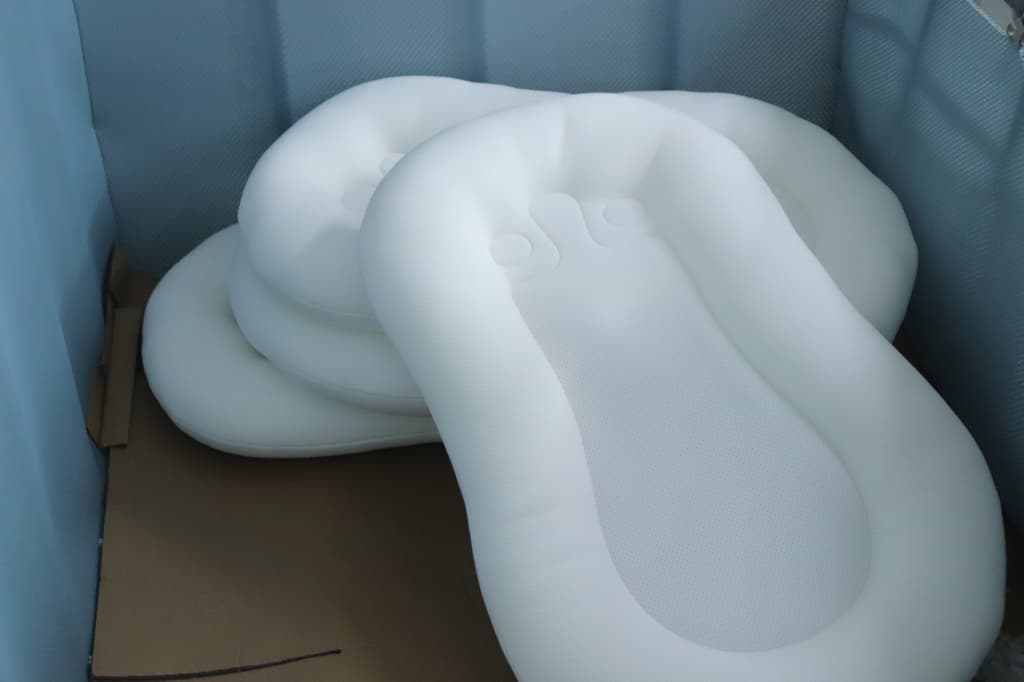
FBB-15 is the product model selected for this baby bed-in-bed compliance development topic.
For this product category, our development focus is not limited to fabric selection or sewing quality. Product classification, intended use, structural requirements and applicable U.S. testing standards are also important parts of the development process.
Our approach to a U.S.-market development project includes the following steps:
| Development Stage | Main Work |
|---|---|
| 1. Product Review | Review intended use, age range, product structure and marketing description. |
| 2. Regulatory Review | Identify the applicable CPSC product category and testing requirements. |
| 3. Product Development | Review fabrics, filling materials, structural details and product specifications. |
| 4. Sampling and Inspection | Prepare samples and perform the agreed internal dimensional and structural inspections. |
| 5. Laboratory Testing | Coordinate the required tests with an appropriate third-party laboratory. |
| 6. Documentation | Prepare BOM information, product drawings, technical files and supporting compliance documents. |
This development approach allows us to address compliance requirements as part of the manufacturing process rather than treating testing as a separate task after production.
For U.S. brands, early coordination between the product team, importer, manufacturer and testing laboratory can also help reduce unnecessary sample revisions and delays.
8|Frequently Asked Questions
8.1|Does Every Baby Bed-in-Bed Product Need to Meet the 10-Degree Requirement?
Not every infant product automatically falls under the same rule. However, baby nests and in-bed sleepers marketed or intended as sleeping accommodations for infants up to five months may fall under 16 CFR Part 1236. Products covered by this standard must meet the applicable requirements, including the 10-degree maximum sleeping surface angle.
8.2|Does a 100% Cotton Baby Bed-in-Bed Need Flame-Retardant Treatment?
Not automatically. Cotton composition alone does not determine whether a product requires flame-retardant treatment. The applicable product category and relevant flammability standards must be identified first.
8.3|Do All Baby Bed-in-Bed Products Need 16 CFR 1632 and 1633 Testing?
No. These are mattress flammability standards. Whether they apply depends on whether the finished product falls within the relevant mattress definitions and regulatory scope. A baby nest or in-bed sleeper should not automatically be classified as a mattress.
8.4|Can a Chinese Manufacturer Help With CPSC Compliance?
Yes. A manufacturer can support product development, material documentation, structural adjustments, sample preparation and third-party laboratory coordination. We provide these types of development support for customers working on U.S.-market baby products.
8.5|What Documents Should Buyers Request From a Manufacturer?
Buyers should request relevant material specifications, a complete BOM, product drawings, test reports where available, sample records and supporting technical documents. The final certification requirements depend on the product category and applicable U.S. regulations.
8.6|Can Mefiss Arrange Flammability Testing for a New Baby Product?
Yes. We can coordinate with appropriate third-party laboratories to arrange project-specific testing. We do not currently have historical 16 CFR Parts 1632 or 1633 test reports, but we are willing to support new projects requiring these tests when they are applicable.
9|Conclusion: Build Compliance Into Baby Product Development
Developing baby bed-in-bed products for the U.S. market requires careful attention to product classification, sleeping surface angle, structural safety, flammability requirements and certification documentation.
For brands, the first step is to identify the correct regulatory category instead of assuming that every padded infant product follows the same standards.
At Mefiss Hometex, we support customers with product structure development, fabric and filling selection, sampling, routine quality inspections and coordination with third-party testing laboratories.
Whether you are developing a new baby bed-in-bed product or updating an existing design for the U.S. market, we can work with your product specifications and applicable compliance requirements from the early development stage.
Developing a Baby Bed-in-Bed Product for the U.S. Market?
Share your product drawings, reference samples, material requirements, target age range and intended market with our team.
We can help review the manufacturing requirements, develop samples and coordinate the necessary third-party testing for your project.