
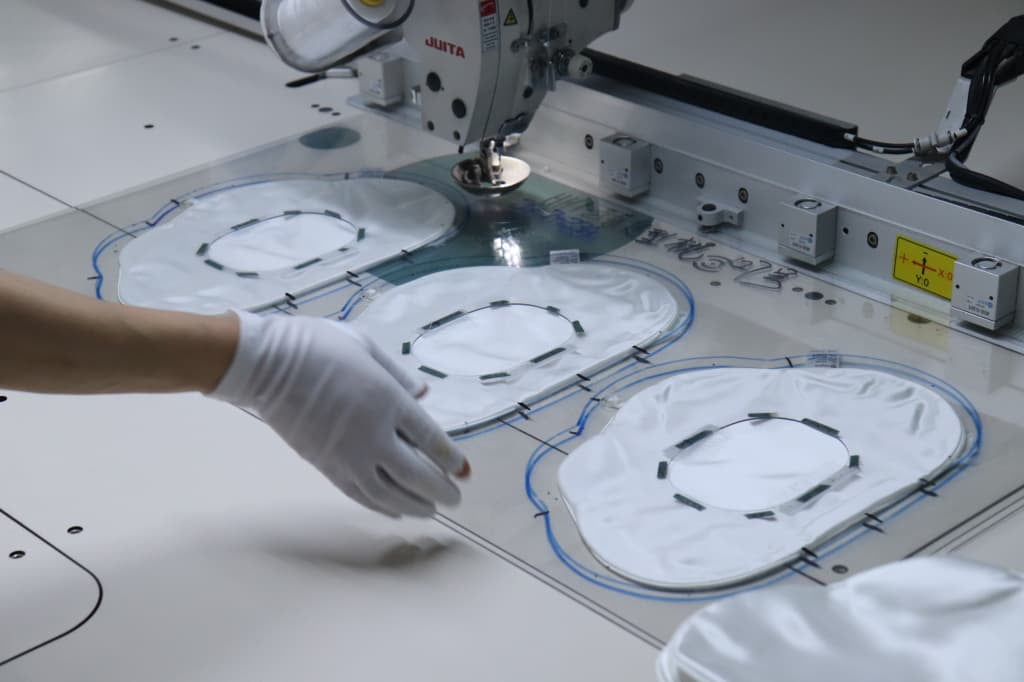
Custom pillow sampling can take as little as 2–5 days when existing fabrics, stocked fillings, and established designs are used. However, a fully customized pillow may require several weeks of material development, mold preparation, sample revisions, and testing before bulk production can begin.
For overseas brands, understanding the difference between sample time and manufacturing lead time is essential for planning a product launch.
At Mefiss Hometex, we manufacture custom pillows using a range of fabrics, filling materials, and construction methods. Some projects require only a simple modification to an existing design. Others involve new materials, complex shapes, and multiple rounds of development.
In this guide, we explain the main factors affecting custom pillow sample time, share the development history of our FBA-210F2 BloomFit Adjustable Baby Pillow, and outline realistic bulk production schedules.
1|How Long Does Custom Pillow Sampling Usually Take?
The fastest sampling projects usually start with materials and designs that are already available.
For a conventional pillow using stocked fabric, existing filling materials, and an established pattern, our typical sampling time is 2–5 days.
This period generally covers material preparation, cutting, sewing, filling, and sample inspection. It does not automatically include new fabric development, tooling, external testing, or international shipping.
1.1|Existing Materials vs. New Materials
Material availability can make a significant difference to the development schedule.
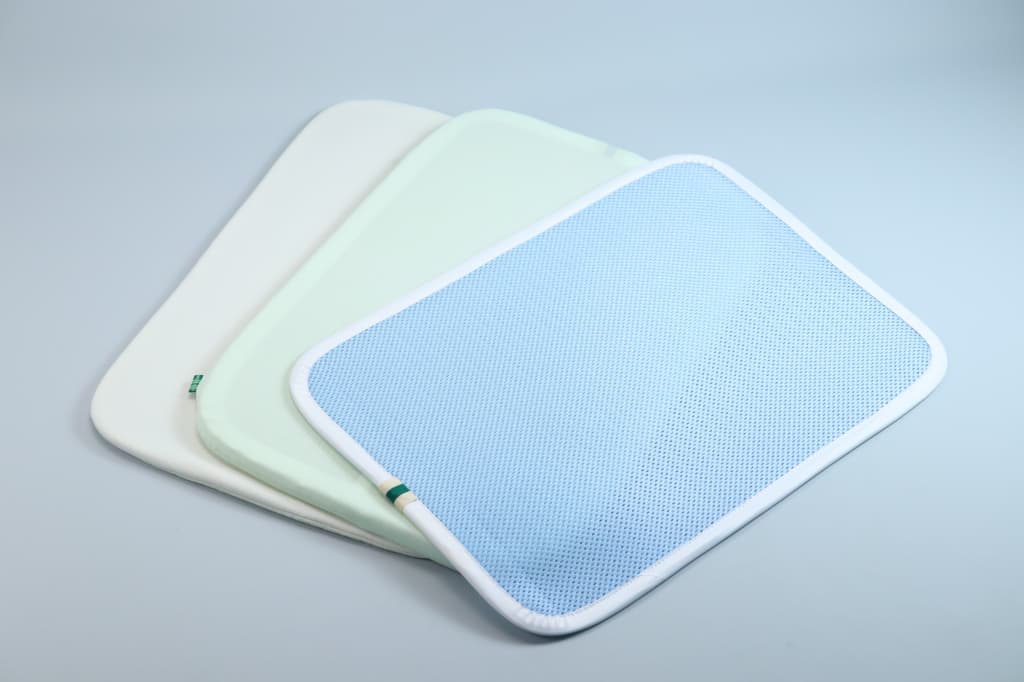
If a brand requests a new fabric color, a different spacer mesh structure, or a specially developed filling material, additional preparation may be required before the finished sample can be completed.
| Material Requirement | Typical Time | Main Activities |
|---|---|---|
| Existing fabric, filling, and pattern | 2–5 days | Regular pillow sampling |
| New color using existing greige fabric | Additional 5–8 days | Lab dips and color approval |
| New fabric construction or spacer mesh | Additional 10–18 days | Knitting or weaving and finishing |
| New filling material | Additional 7–12 days | Trial production, conditioning, and material checks |
These are planning references, not guaranteed delivery dates. Multiple color corrections, material adjustments, or supplier delays can extend the schedule.
For example, a brand selecting an existing 4mm spacer mesh may proceed faster than one requesting an entirely new mesh construction with different thickness, weight, and finishing requirements.
2|How Do Embroidery, Printing, and New Molds Affect Sample Time?
Brand customization can often be completed alongside basic pillow sampling. However, not every development task can run at the same time.
2.1|Woven Labels, Embroidery, and Printing
A woven label sample generally takes 3–5 days when the artwork is ready.
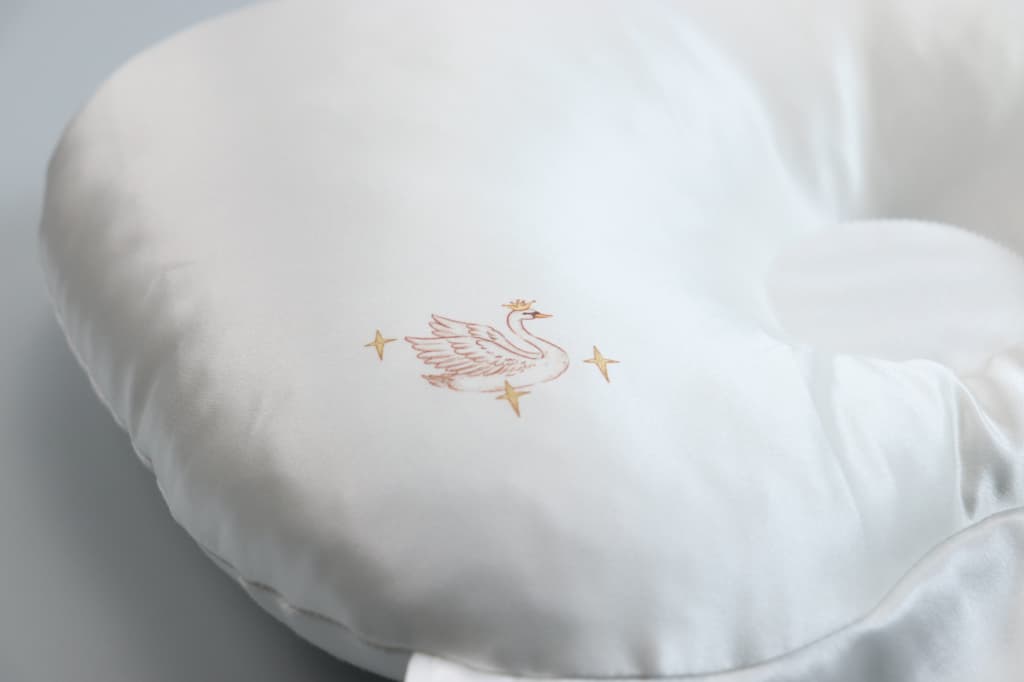
Embroidery development typically takes 3–6 days for embroidery programming and a sample. Simple digital printing can take approximately 3–5 days, while reactive printing generally requires 7–12 days.
Woven labels, embroidery preparation, and straightforward digital printing can often proceed in parallel with pillow sampling. Reactive printing may require a longer material preparation period.
We recommend providing approved logo artwork, preferably in an editable vector format, before sampling begins.
2.2|Why New Pillow Molds Take Longer
A completely new pillow mold is different from adding a label or changing the cover fabric.
For new foam molds, forming molds, TPE tube molds, or specially shaped baby pillow molds, our typical mold development reference is 18–30 days.
The process may include structural evaluation, mold manufacturing, trial molding, and necessary corrections.
Although certain accessories can be prepared during this period, the final molded sample cannot be completed until a suitable mold is available.
This makes new mold development a critical scheduling stage rather than a simple accessory preparation task.
3|Real ODM Development Example: BloomFit Adjustable Baby Pillow
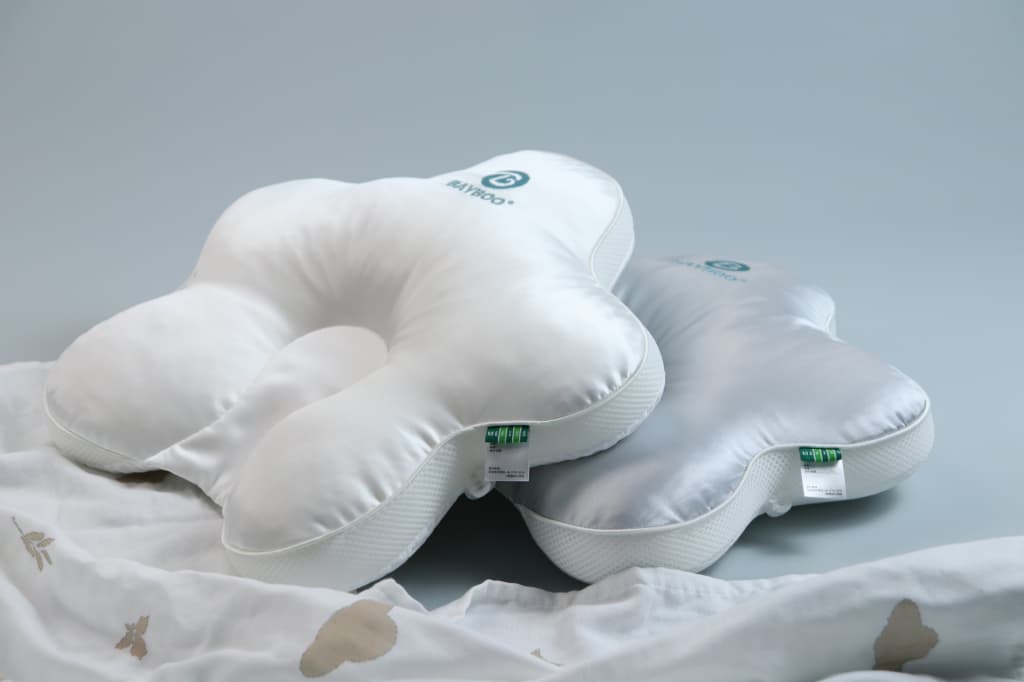
Our FBA-210F2 BloomFit Adjustable Baby Pillow illustrates why a newly developed pillow can take considerably longer than a regular sample.
BloomFit is an adjustable pillow design featuring a petal-shaped outline, dual-sided functional fabric, and movable TPE tube filling.
3.1|Product Materials and Structure
One side uses Mes-tio Shield antibacterial 4mm spacer mesh, while the other uses a PCM phase-change temperature-regulating fabric.
The pillow contains TPE tube filling and is designed to be washable as a complete product.
Its structure includes five independently adjustable drawstring points that allow the filling height and support areas to be adjusted. The pillow also uses independently divided filling zones.
Branding options include a side woven label, edge embroidery, and optional surface printing. The standard configuration generally uses a woven label.
3.2|BloomFit Development Timeline
According to the original ODM development records for this product, the major stages included:
| Development Stage | Recorded Time |
|---|---|
| Structural concept and first handmade sample | 7 days |
| First mold trial sample | 25 days |
| Two revision rounds | 4–6 days per round |
| Pre-production sample and baby-product safety testing | Additional 12–20 days |
The revisions focused on the pillow outline, drawstring adjustment positions, and TPE tube filling quantity.
The overall development period from the initial concept to the approved pre-production sample was approximately 45–60 days, including mold development and testing.
This overall period reflects the actual project schedule. Individual stage durations should not simply be added together, because some preparation activities overlapped.
BloomFit demonstrates that a complex ODM pillow project requires more than sewing a prototype. Structural adjustment, material coordination, tooling, and testing all influence the final timeline.
4|How Do Sample Revisions and Testing Affect the Schedule?
The first sample is not always the final approved version. Brands may request changes after reviewing the pillow’s dimensions, filling quantity, appearance, or construction.
4.1|Sample Revision Time
Minor revisions, such as adjusting pillow height, changing filling quantity, modifying cover dimensions, or switching to another stocked fabric, generally take 3–5 days per round.
More extensive revisions involving fabric changes, structural adjustments, and a different filling material may take 6–10 days per round.
Every additional revision can affect the development schedule. We therefore recommend collecting feedback on the first sample and confirming the required changes together whenever possible.
4.2|Third-Party Testing and Product Approval
For baby and children’s products, the testing plan depends on the product category, construction, intended market, and applicable regulations.
Depending on those requirements, testing or documentation may involve chemical safety, formaldehyde, heavy metals, component strength, flammability, or relevant textile certifications.
For planning purposes, our regular baby-product testing reference is approximately 7–15 working days. If a product requires correction and retesting, another 5–10 days may be needed.
Not every test or certification applies to every pillow. For example, ASTM F963 concerns toy safety and should not be treated as a universal pillow requirement. OEKO-TEX STANDARD 100 certification also has its own defined product and material scope.
We recommend determining the applicable testing requirements for the target market before development and submitting the finalized sample for formal testing after its construction has been confirmed.
Testing a design that is still being changed can create unnecessary repeat testing, additional cost, and delays.
5|What Is the Bulk Production Lead Time for Custom Pillows?
Once development is complete, the project enters the bulk production stage.
At Mefiss Hometex, the standard production lead time begins only after three conditions have been met:
- The customer has approved the pre-production (PP) sample in writing.
- The agreed deposit has been received.
- All required main materials and accessories are available for production.
The production clock does not begin simply because the first sample has been shipped or a deposit has been paid.
5.1|Typical Bulk Production Schedule
For established pillow designs with materials ready and no complex new printing or tooling requirements, our typical production references are:
| Order Quantity | Typical Production Lead Time |
|---|---|
| 500 pieces | 12–18 days |
| 1,000 pieces | 15–22 days |
| 3,000 pieces | 22–30 days |
These periods refer to factory production, not international shipping or final delivery to the buyer.
Special fabric dyeing, new molds, extensive printing, or additional inspection and testing may extend the total order schedule. During the August–October peak season, planning allowances of approximately 20% may be appropriate, depending on production capacity and order conditions.
5.2|How Can Brands Avoid Unnecessary Delays?
We recommend confirming the product structure, material specifications, logo artwork, and packaging requirements as early as possible.
For new ODM projects, the development schedule should include time for revisions and required testing before the intended production date.
For repeat orders, maintaining an approved reference sample and stable material specifications can help reduce repeated development work.
6|Frequently Asked Questions About Pillow Manufacturing Lead Time
6.1|Can I Get a Custom Pillow Sample Within One Week?
Yes, in many cases. When the design is established and the required fabric and filling materials are in stock, regular sampling generally takes 2–5 days. New materials, molds, or extensive customization require additional time.
6.2|Does Adding a Logo Delay Pillow Sampling?
Not necessarily. Woven labels, embroidery, and simple digital printing can often be prepared alongside pillow sampling. Reactive printing or complex branding requirements may extend the schedule.
6.3|How Long Does a New Pillow Mold Take?
A completely new pillow mold typically requires approximately 18–30 days for development and trial work. The actual period depends on the structure, tooling requirements, and necessary corrections.
6.4|How Much Time Should I Allow for Sample Revisions?
Minor changes generally take 3–5 days per revision round. Combined material and structural changes may require 6–10 days per round. Multiple rounds should be included in the development plan.
6.5|When Does the Bulk Production Lead Time Start?
Our production lead time starts after written PP sample approval, receipt of the agreed deposit, and availability of all main materials and accessories. All three conditions must be satisfied.
6.6|How Long Does It Take to Produce 1,000 Custom Pillows?
For an established pillow design with materials ready, our typical factory production reference is 15–22 days. This excludes prior development, special material preparation, additional testing, and international shipping.
7|Conclusion: Plan the Complete Development and Production Timeline
Custom pillow sample time and manufacturing lead time are not fixed numbers. They depend on the materials, product structure, customization methods, revision requirements, testing, and order quantity.
At Mefiss Hometex, regular samples using existing materials typically take 2–5 days. However, a complex ODM project involving new tooling and multiple development stages may take substantially longer, as demonstrated by our BloomFit Adjustable Baby Pillow.
The most reliable way to plan a launch is to separate material development, sample approval, testing, bulk production, and shipping into clearly defined stages.
By confirming the critical requirements early, brands can establish more realistic schedules and reduce avoidable delays.
Planning a Custom Pillow Development Project?
Share your pillow design, preferred materials, branding requirements, target quantity, and expected launch date. Our team can help you evaluate the sampling stages and develop a realistic production schedule for your project.