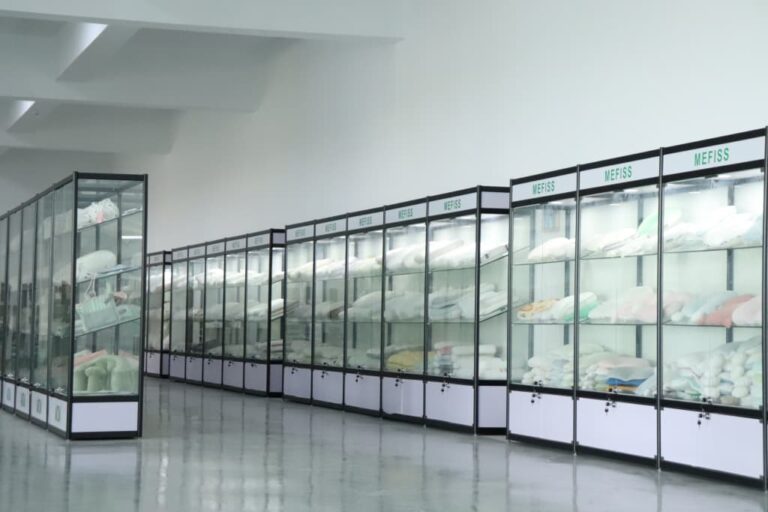
Choosing a custom pillow manufacturer in China is not just about finding a competitive price. The right partner should be able to turn your product requirements into a workable design, produce a sample that matches your expectations, and reproduce the approved specifications consistently in bulk production.
For brands developing baby pillows, kids’ pillows, adult sleeping pillows, or specialty pillow products, the supplier’s development experience matters as much as its manufacturing capability. At Mefiss Hometex, we support custom home textile projects from material selection and product design through sampling, production, and packaging. This guide explains what buyers should examine before choosing a pillow manufacturing partner in China.
1|Check Whether the Manufacturer Can Develop Your Type of Pillow
A factory that produces standard fiber-filled pillows may not have the same experience as one that develops shaped foam pillows, adjustable kids’ pillows, or pillows with multiple internal compartments. Start by matching the manufacturer’s actual product experience to your project.
1.1|Look Beyond the Product Catalog
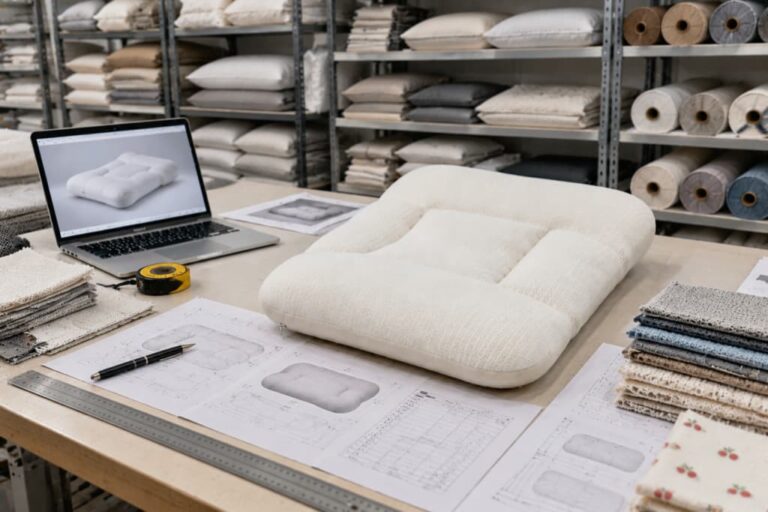
Ask whether the manufacturer can work from your reference sample, drawings, product photographs, or concept. For a custom pillow, the development work may include selecting the filling, designing the cover pattern, creating separate filling compartments, choosing a closure, and determining how the components fit together.
A useful supplier should be able to explain how it would develop your product, not simply show you a similar item from its existing catalog.
1.2|Confirm the Relevant Manufacturing Processes
Different pillow constructions require different production skills. Fiber-filled pillows require controlled filling and cover assembly. Shaped foam pillows require accurate core cutting and a cover pattern that follows the core’s contours. Adjustable pillows may need separate filling compartments, removable inserts, or drawstring structures.
At Mefiss Hometex, our product range includes infant head-shaping pillows, kids’ pillows, adult pillows, and specialty designs. We develop products around the intended structure, filling materials, cover construction, and functional requirements rather than relying exclusively on standard catalog designs.
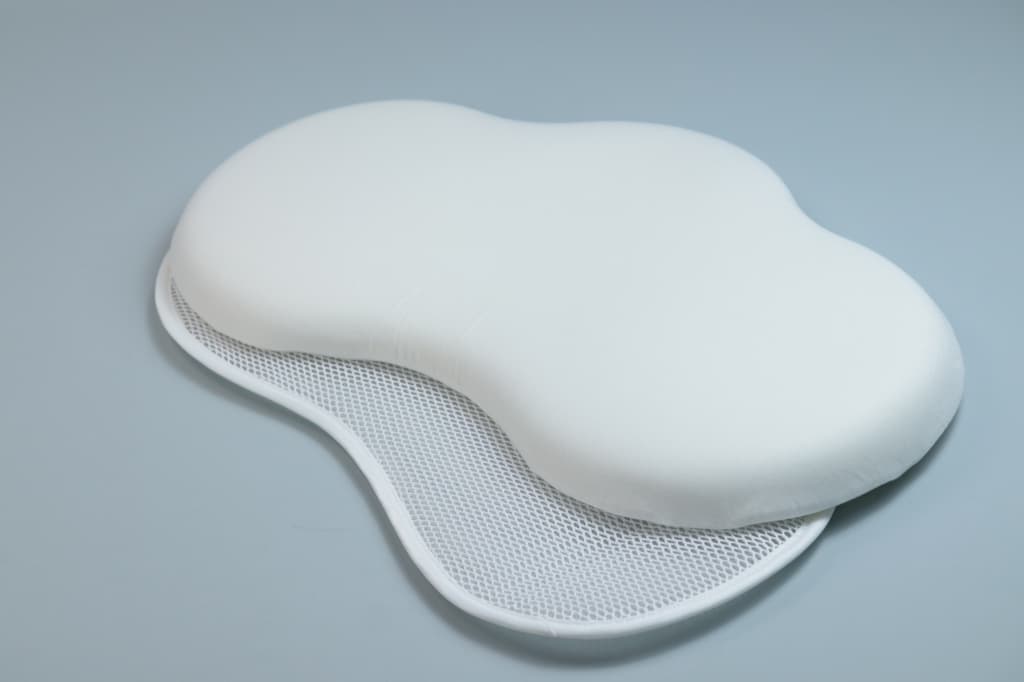
Explore our custom pillow and home textile product collection to see examples of our product development range.
2|Evaluate Material Selection and Product Development Capability
Materials influence a pillow’s structure, hand feel, breathability, weight, washing characteristics, and manufacturing process. A capable manufacturer should be able to explain why a particular material suits the intended product and how it will be incorporated into the design.
2.1|Ask How the Factory Selects Filling Materials
For example, polyester fiber is suitable for soft, lofty filling. TPE tubes can be used in defined support zones and adjustable pillow constructions. Memory foam can be cut into contoured shapes, while silicone foam offers a washable core option. These materials have different processing methods and cost implications.
During development, we identify the intended function of each pillow section and select the appropriate filling structure. For products with several support zones, we can combine materials in separate compartments rather than using one filling throughout the entire pillow.
2.2|Check Whether the Supplier Can Support Fabric Development
The cover fabric is another important part of a custom pillow. Its stretch, thickness, surface texture, and sewing characteristics affect the finished appearance and fit. If your product uses specialized spacer mesh or 3D mesh, ask whether the supplier can source and develop the required fabric and integrate it into the finished product.
Mefiss Hometex works with our own fabric manufacturing business, Mefiss Textile, which specializes in warp-knitted 3D mesh and spacer mesh. This connection supports coordinated fabric and finished-product development for relevant pillow and bedding projects.
Learn more about spacer mesh fabric and how this material is used in breathable textile products.
3|Use Sampling to Evaluate the Supplier’s Execution
A sample reveals how well the manufacturer translates a product brief into a physical item. It also gives both parties a concrete reference before bulk production begins.
3.1|Provide a Clear Development Brief
To start a custom pillow project efficiently, prepare the information available for your product:
- Reference photographs, drawings, or an existing sample.
- Finished dimensions and any critical dimensional tolerances.
- Preferred filling material, firmness, and pillow construction.
- Cover fabric, closure type, brand labels, and washing labels.
- Packaging requirements and intended sales market.
- Target order quantity and expected product cost.
If some design details are not finalized, provide the target use, intended customer, and reference products first. The development team can then discuss the construction and material options needed to move the project forward.
3.2|Evaluate the Sample Against the Brief
When the sample arrives, check the actual product against the agreed requirements. Measure the dimensions, inspect the filling and internal construction, assess the cover fit, and check the sewing, zipper, and labels. For washable products, include the agreed washing and drying checks during development.
At Mefiss Hometex, we record the confirmed product parameters in a dedicated production process sheet after sampling. This provides a written reference for the approved construction and helps our production team follow the confirmed specifications during mass production.
For a detailed checklist, read our guide to evaluating pillow samples before mass production.
4|Inspect Production Capability and Quality Control
A polished sample is only one part of supplier evaluation. Buyers should also understand how the factory manages the production process and maintains consistency across an order.
4.1|Ask to See the Actual Production Process
A factory visit or live video walkthrough can help you understand the relationship between the supplier’s stated capabilities and its actual operations. Look at the relevant processes for your product, including cutting, sewing, filling, assembly, inspection, and packaging.
For a custom pillow manufacturer, useful questions include:
- How are filling materials and finished components identified?
- How are dimensions and filling quantities controlled?
- How are broken threads, open seams, zipper defects, and label placement checked?
- How are approved samples and production specifications communicated to operators?
- What final inspections take place before products are packed?
4.2|Check Whether Quality Control Is Documented
Ask the supplier to explain its incoming-material checks, in-process inspections, and final inspection procedures. For foam pillows, core dimensions and weight can be useful inspection points. For fiber-filled products, filling weight and distribution are important. For removable covers, sewing, closures, and fit should be checked against the approved sample.
At Mefiss Hometex, our production base in Changshu covers approximately 8,900 square meters, with six specialized product lines across pillows, mattresses, quilts, cushions and mats, pet textiles, and custom products. Our manufacturing workflow includes cutting, sewing, filling, inspection, and packaging processes.
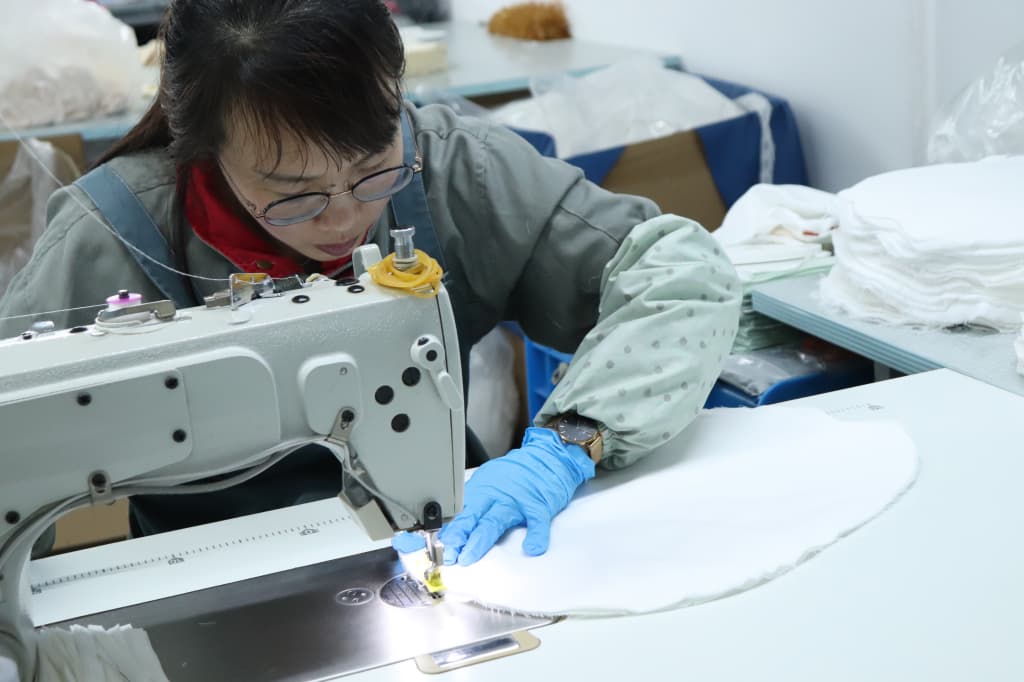
You can also review our manufacturing and product development FAQ for more information about our customization and production workflow.
4.3|Verify Certificates and Test Reports Carefully
When a project requires certifications or laboratory testing, ask for the relevant documents and check the named applicant, manufacturer, product or material, model, test standard, and validity details where applicable. A certificate or test report should match the product or material for which you intend to use it.
For example, our FBA-131A kids’ silicone pillow has a UKCA-related conformity document referencing the listed substance test standards. This is a product-specific example of the documentation we can discuss with buyers; it should not be interpreted as certification covering every pillow in our range.
For general guidance on supplier quality management, consult the ISO guide to using ISO 9001 when selecting suppliers. It explains the role of purchasing requirements, supplier assessment, and inspection arrangements.
5|Confirm MOQ, Lead Time, and Communication Before Ordering
Commercial terms are part of supplier selection because they affect product launch planning, inventory, and cash flow. Obtain a clear quotation and written schedule before approving the order.
5.1|Compare Quotations on the Same Basis
When comparing manufacturers, make sure the quotations refer to the same product specifications. Differences in filling material, fabric composition, construction, labels, packaging, or testing requirements can produce different prices even when the products look similar.
Ask the supplier to identify the quoted material specifications, included packaging, sample charges, minimum order quantity, payment terms, and any additional costs. This makes supplier quotations more useful for a like-for-like comparison.
5.2|Agree on the Production Schedule
Confirm the expected sampling period, sample revision time, bulk production lead time, and shipping arrangements. The schedule should reflect the actual product complexity, order quantity, material availability, and packaging requirements.
Our published guidance at Mefiss Hometex indicates that many samples take approximately 2–5 days, while typical production schedules are around 20 days for orders of up to 5,000 pieces and 30 days for orders of up to 10,000 pieces. These are planning references for qualifying projects, not a substitute for the confirmed schedule in an individual quotation.
5.3|Evaluate Communication and Confidentiality
A good manufacturing partner communicates clearly when specifications change, materials need to be selected, or a sample requires revision. Before starting development, establish who approves samples, how changes are recorded, and how confidential drawings and product designs will be handled.
At Mefiss Hometex, our development process begins with understanding the customer’s goals and product requirements, followed by material and structure planning, sampling, specification confirmation, and production. We also use confidentiality arrangements to support projects involving original product designs.
6|A Practical Supplier Selection Checklist
Before committing to a custom pillow manufacturer, use the following checklist to organize your assessment.
| Evaluation Area | What to Confirm |
|---|---|
| Product experience | Experience with your pillow type, filling, cover, and construction |
| Development | Ability to work from drawings, reference samples, or product concepts |
| Sampling | Sample lead time, revision process, and approval procedure |
| Quality control | Material checks, production inspections, final checks, and records |
| Documentation | Relevant certificates, test reports, product specifications, and approved samples |
| Commercial terms | MOQ, quotation scope, payment terms, lead time, and packaging |
| Communication | Clear ownership of approvals, change records, and confidentiality |
For another perspective on assessing a supplier’s quality system, see the ISO guidance on supplier confidence and ISO 9001.
7|Frequently Asked Questions
7.1|What Information Should I Send to a Custom Pillow Manufacturer?
Start with the product’s intended use, target customer, dimensions, reference photographs or samples, preferred filling, cover requirements, packaging, target order quantity, and target market. The more clearly you define the product, the easier it is to prepare a useful quotation and development plan.
7.2|Should I Choose a Factory That Offers OEM or ODM Services?
OEM is suitable when you already have specifications, drawings, or an approved sample and need a manufacturer to produce them. ODM is useful when you also need support with material selection, product structure, design, or packaging. Choose the development model that matches the work your project requires.
7.3|How Can I Tell Whether a Supplier Can Handle Bulk Production?
Review the relevant production processes, ask how the approved sample is translated into written specifications, and understand the supplier’s inspection procedures and production schedule. A clear process for handling changes and quality issues is also important.
7.4|Should I Compare Suppliers by Unit Price Alone?
No. Compare quotations using the same materials, dimensions, construction, packaging, and order quantity. Also consider sampling capability, production consistency, lead time, communication, and the cost of any required testing or product revisions.
7.5|Can a Manufacturer Help Develop a Pillow From a Reference Photograph?
Yes. A reference photograph can be a useful starting point. For development, provide dimensions, material preferences, construction details, and any required functional features as they become available. The manufacturer can then turn the concept into a sample for review and refinement.
8|Conclusion: Choose a Manufacturing Partner, Not Just a Quotation
Choosing a custom pillow manufacturer in China requires more than comparing prices. Product development experience, material knowledge, sampling, production controls, documentation, and communication all influence the success of a custom pillow project.
At Mefiss Hometex, we develop pillows and other home textile products from material selection and structure design through sampling, specification confirmation, and bulk manufacturing. Our aim is to help brands translate their product requirements into manufacturable designs and establish a clear reference for production.
Develop Your Custom Pillow with Mefiss Hometex
Planning a new pillow for your brand? Send us your reference sample or product concept, target dimensions, preferred filling and cover materials, packaging requirements, and estimated order quantity. Our team can help plan the product structure, prepare samples, and discuss the production requirements for your project.
Visit Mefiss Hometex | Explore Our Product Collection | Learn About Our Development Process