Choosing between OEM and ODM pillow manufacturing depends on whether your brand already has a defined product design or needs a manufacturing partner to develop the product from an initial idea.
For cross-border DTC brands, Amazon sellers, home textile brands, and importers, this decision affects product design, tooling investment, minimum order quantities (MOQs), sampling time, and packaging. At Mefiss Hometex, we offer both OEM production based on customer-approved specifications and ODM development from concept to finished pillow.
Understanding the difference helps you choose a development route that matches your team’s capabilities, launch schedule, and budget.
1|What Is the Difference Between OEM and ODM Pillow Manufacturing?
1.1|OEM: You Define the Product, We Manufacture It
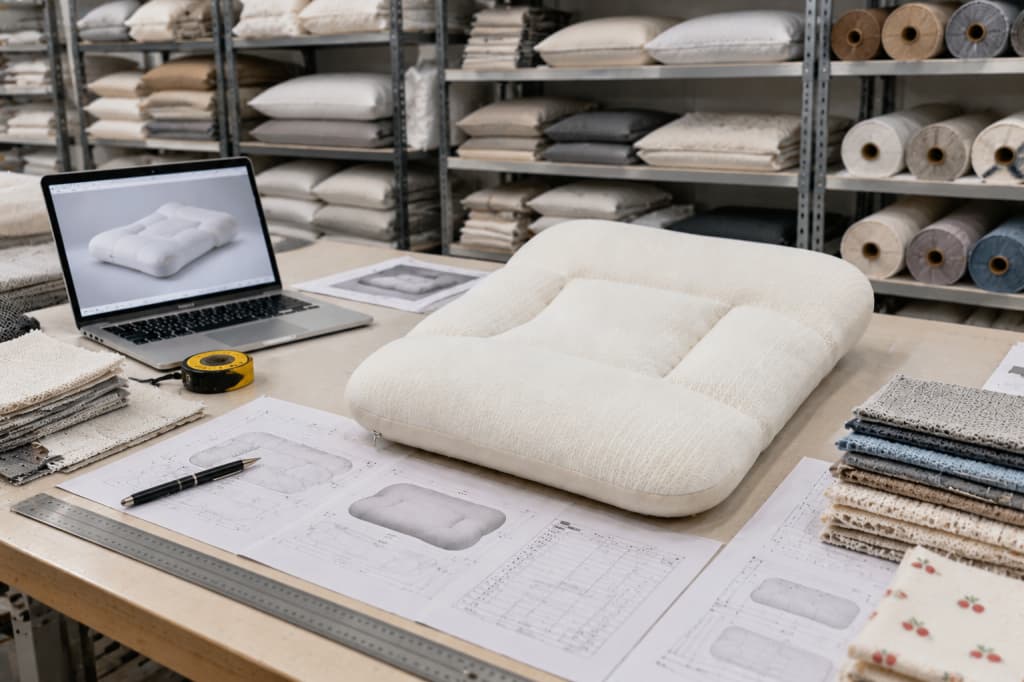
OEM is designed for brands that already have a defined pillow design, technical drawings, dimensional specifications, or an approved physical sample. You specify the core, cover fabric, construction, logo, and packaging. We manufacture according to the confirmed requirements.
Our OEM service can cover:
- Reproducing an approved pillow sample or technical design.
- Manufacturing the specified core, filling structure, and cover.
- Applying your logo through the agreed label, printing, or embroidery method.
- Producing branded hangtags, washing labels, retail boxes, and shipping packaging.
- Recording approved specifications and carrying out the corresponding quality inspections.
- Coordinating required third-party testing and relevant export documentation.
OEM is a practical choice when your product has already been developed and tested in the market. The priority is to reproduce the approved design accurately, maintain consistent quality, and establish a reliable production schedule.
1.2|ODM: We Help Develop the Product from Your Idea
ODM is suitable when you know the product concept and intended benefits but do not yet have a finished design or physical sample.
For example, you may want to launch a washable and breathable pillow, a pillow with zoned support, or a cooling pillow for an overseas market. You provide the target customer, product positioning, key functions, and target cost. Our in-house technical and development team helps turn those requirements into a manufacturable product.
Our ODM development work can include pillow shape selection, ergonomic structure design, core material selection, filling combinations, support adjustment, cover fabric selection, color development, removable-cover construction, logo placement, and packaging design.
We work with 3D spacer mesh, silicone foam, memory foam, and mixed-filling structures. Our own technical and development team handles pillow structures, fabrics, and sampling rather than outsourcing design work to an external agency. When laboratory testing or certification is required, we coordinate with the relevant third-party testing organizations.
Learn more about our product development and manufacturing services.
2|Which Model Is Right for Your Brand?
2.1|Choose OEM for an Established Product
OEM is generally the more direct route when your brand already has an approved pillow design, established material specifications, and a product that is ready for repeat production.
This model suits established home textile brands replenishing proven products, Amazon sellers with approved samples, DTC brands with an internal product team, and importers seeking a stable manufacturing source.
To begin, provide the approved sample or drawings, finished dimensions, material specifications, cover details, logo files, packaging artwork, and estimated order quantity. These details establish the production reference and help prevent misunderstandings during manufacturing.
2.2|Choose ODM to Develop a New Product Direction
ODM is often more suitable for startups and sellers without an internal product development team. You may know the selling points you want to offer, but still need help translating them into a specific pillow structure and material combination.
We can start from an existing product platform, adjust selected specifications, and develop a private-label version. This gives your brand a practical starting point without requiring a completely new mold for every project.
If your product later needs a more exclusive shape or internal construction, the existing ODM design can become the starting point for further development.
3|ODM Does Not Mean an Unchanged Generic Product
A common misconception is that ODM simply means choosing a standard catalog product and adding a logo. In practice, an existing product platform can support several forms of customization.
Depending on the product structure, we can adjust the pillow height, support configuration, cover fabric, color, selected construction details, logo, labels, and packaging. These changes allow brands to develop a product that fits their positioning without redesigning every component from scratch.
OEM and ODM also do not represent different quality levels. Quality depends on material specifications, production execution, inspection standards, and the consistency of the finished product. OEM means the customer defines the specifications; ODM means we contribute more of the product development work.
For both models, we can document the approved materials, dimensions, construction, filling requirements, and packaging details so the production team has a clear reference for bulk manufacturing.
4|Two Product References: FBA-211 and FBA-131A
Our existing kids’ pillow designs illustrate two different approaches to product structure. FBA-211 uses zoned filling, while FBA-131A uses a silicone foam core in an adjustable-height pillow design. Both can serve as references when discussing a new OEM or ODM project.
4.1|FBA-211: A Segmented Kids Pillow with Mixed Filling
FBA-211 demonstrates how different filling materials can be assigned to different areas of a pillow. In the older-child versions, TPE tubes are used in the neck-support area, while Snow Ball Fiber, made from 100% polyester fiber, is used in softer filling areas.
The range includes different configurations for different age groups. For a brand developing a similar product, this design provides a reference for discussing zoned construction, filling allocation, pillow height, and the combination of support and softness.
With OEM, we can manufacture according to the customer’s confirmed construction and specifications. With ODM, we can use a comparable design concept as a starting point for a product developed around the brand’s requirements.
4.2|FBA-131A: An Adjustable-Height Silicone Foam Kids Pillow
FBA-131A is a kids’ pillow built around a washable silicone foam core and a removable cover. Its construction provides a reference for brands interested in adjustable pillow height, washable filling, and removable-cover design.
The listed design uses core layers in different thicknesses that can be combined to change the pillow height. Cover options include printed cotton knit fabric, cotton gauze, and cooling fabric.
For OEM projects, the confirmed specifications provide the manufacturing reference. For ODM projects, the existing design can inspire changes to the core configuration, cover materials, colors, and branded packaging.
Explore our pillow and home textile product collection for additional product development references.
5|How Tooling, Materials, and Packaging Affect MOQ and Sampling Time
The OEM or ODM label alone does not determine the final price or minimum order quantity. The main factors are new tooling, material sourcing, custom fabrics, packaging specifications, and additional testing requirements.
5.1|Start with an Existing Product Platform
Using an existing mold and readily available fabric can reduce initial development work. Our typical planning references are:
- ODM color changes and logo customization: approximately 7–10 days for sampling, with an MOQ of 300–500 pieces.
- OEM reproduction of an established design: approximately 10–14 days for sampling, with an MOQ starting at 500 pieces for standard materials and mature structures.
- ODM development requiring a new mold: approximately 18–25 days for sampling, with an MOQ of 1,000 pieces or more.
These figures are planning references for the stated project types. The confirmed quotation and development schedule specify the requirements for each order.
5.2|Understand New Mold Costs
A new ergonomic pillow shape may require a new foam mold or cutting template. This is usually one of the largest initial development costs and can extend the sampling schedule.
As a practical reference, new foam mold costs can start from several hundred US dollars, depending on the shape and tooling requirements. If an existing mold can be used with adjustments to height, fabric, or color, the project may avoid the same level of tooling investment.
For brands testing a new product concept, an existing platform offers a way to control initial investment. A dedicated mold is more appropriate when a unique contour or internal construction is required.
5.3|Plan for Special Materials and Custom Fabrics
Custom-density silicone foam, specialty composite mesh, and customized gel layers can increase material costs and minimum purchasing quantities. Exclusive dyed colors and printed fabrics are also subject to fabric supplier MOQs.
For brands prioritizing a lower initial order, stock fabrics with a custom logo are generally a more economical starting point than exclusive fabric development.
Our fabric business, Mefiss Textile, specializes in 3D mesh and spacer mesh. For relevant projects, our fabric and finished-product capabilities help coordinate material selection with pillow construction. Learn more about 3D spacer mesh and sandwich mesh fabric.
5.4|Include Packaging and Testing in the Initial Plan
Standard OPP bags and general-purpose card hangtags usually offer a lower-MOQ starting point. Custom retail boxes commonly require 500–1,000 pieces, depending on the specification and supplier.
Additional requirements for FDA-related testing, flame-retardancy testing, or comprehensive infant-product testing can increase laboratory fees and development time. We coordinate relevant third-party testing according to the product requirements and target market.
6|From Product Concept to Bulk Production
Whether you choose OEM or ODM, a defined development process helps align the product design, sampling schedule, and production requirements.
6.1|Define the Product Brief
For OEM, provide the approved sample or technical drawings, dimensions, material specifications, logo files, and packaging artwork.
For ODM, start with the product concept, target customer, required functions, target market, estimated quantity, and target cost. This gives our team a clear basis for recommending a product structure and development route.
6.2|Develop and Approve the Sample
Our in-house technical and development team works on pillow structure, core materials, cover patterns, colors, and packaging. Depending on the project, development may include prototype samples, pre-production samples, washing tests, compression and recovery tests, and colorfastness tests.
After approval, we record the confirmed materials, dimensions, construction, filling requirements, and packaging details in the production process sheet and related manufacturing documents.
6.3|Follow the Approved Specifications in Bulk Production
Bulk production follows the approved sample and documented specifications. Our workflow includes cutting, sewing, filling, inspection, and packaging, with checks carried out according to the relevant product requirements.
The approved sample and production process sheet give our team a defined reference, helping maintain consistency between development and mass production.
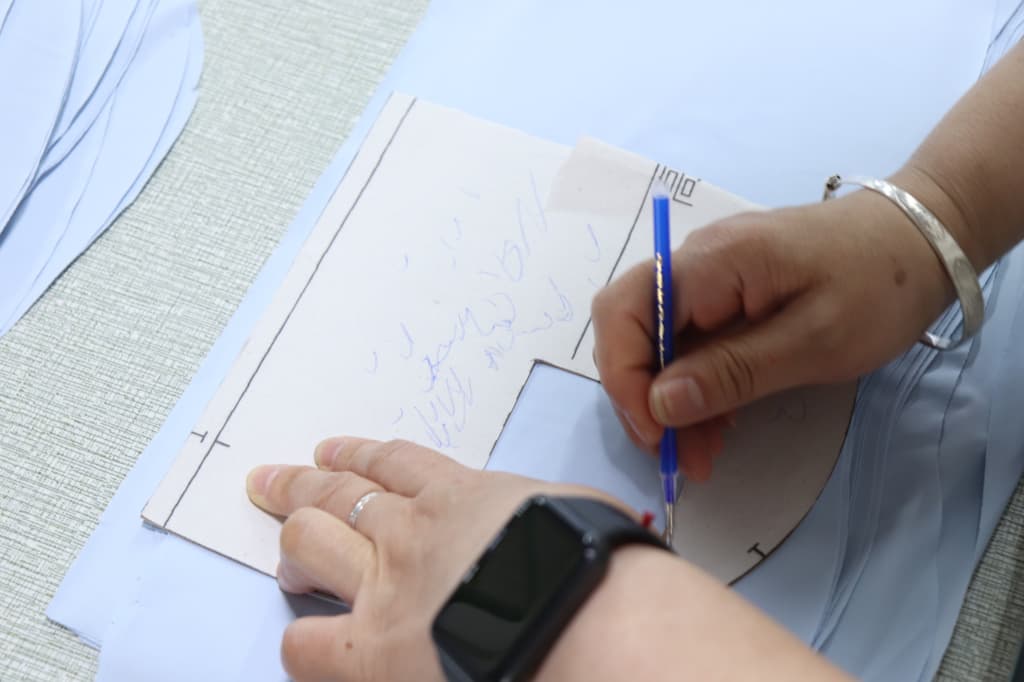
For a closer look at sample inspection, read our guide to evaluating pillow samples before mass production.
7|Frequently Asked Questions
7.1|Is ODM Always More Expensive Than OEM?
No. ODM based on an existing product platform can reduce tooling and development costs. A fully customized ODM project may cost more if it requires a new mold or specialty materials. OEM costs can also increase when the approved design requires new tooling or custom materials.
7.2|Can I Customize an Existing ODM Pillow with My Own Brand?
Yes. Depending on the product, customization can include cover fabric, color, logo, labels, selected structural details, and packaging. This provides a practical way to create a private-label product without developing every component from scratch.
7.3|Can OEM Projects Have a High MOQ?
Yes. OEM does not automatically mean a low MOQ. A product requiring a new mold, custom-dyed fabric, printed materials, or special packaging may still need a substantial initial order.
7.4|Can a Brand Start with ODM and Develop an Exclusive Product Later?
Yes. A brand can start with an existing product platform, test the market, and later invest in a more exclusive shape, internal construction, or material specification. This allows product development to progress alongside market validation.
7.5|What Should I Send to Start a Pillow Development Project?
For OEM, send your reference sample or technical specification, dimensions, materials, logo files, packaging requirements, and target quantity. For ODM, start with the product concept, target customer, required functions, target market, estimated quantity, and target cost.
8|Conclusion: Choose the Model That Fits Your Brand
OEM is the practical choice when your product design and specifications are established and you need consistent manufacturing. ODM is the stronger starting point when you have a product concept but need support with structure, materials, sampling, and packaging.
At Mefiss Hometex, we support both approaches through in-house product development, material selection, sampling, production specification management, and bulk manufacturing. FBA-211 and FBA-131A provide concrete examples of different pillow structures, while our development capabilities allow us to adapt product solutions to a brand’s requirements.
Start Your Custom Pillow Project with Mefiss Hometex
Whether you already have an approved pillow design or are starting with a product idea, share your reference sample or concept, target specifications, preferred materials, packaging requirements, and estimated order quantity. Our team can help identify the right development route and prepare a practical sampling and production plan.
Visit Mefiss Hometex | Explore Our Pillow Products | Learn About Our Development Services