POE air fiber is becoming an interesting alternative to foam, latex, coconut fiber and other traditional mattress core materials.
It is especially useful when a mattress needs to be washable, breathable, quick to dry and easy to keep clean.
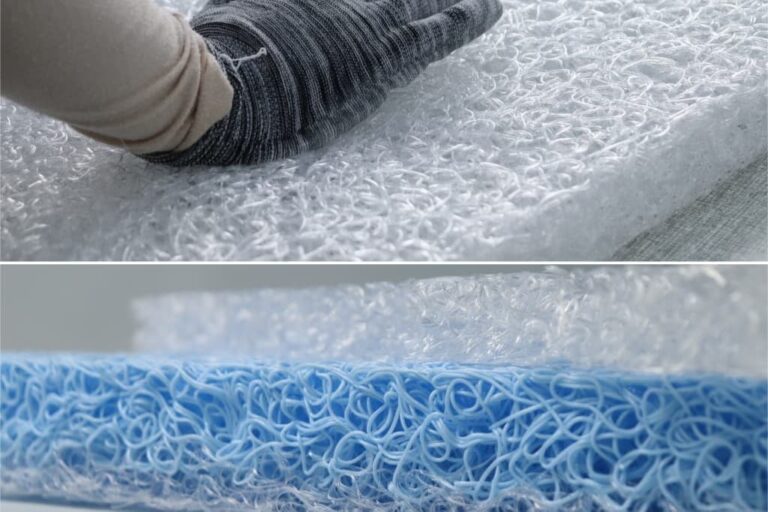
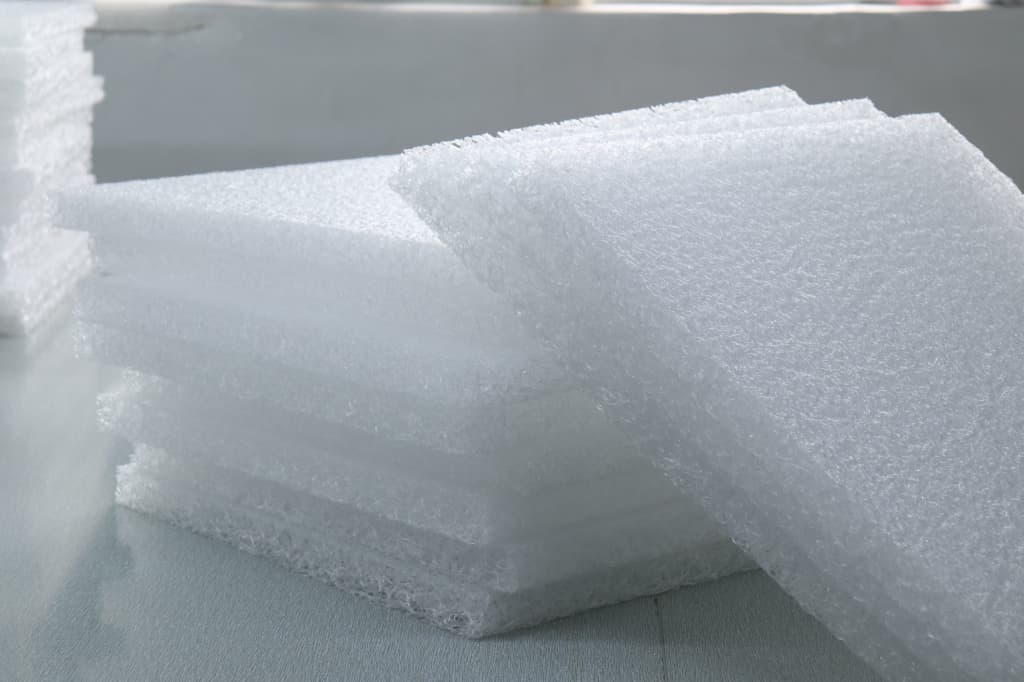
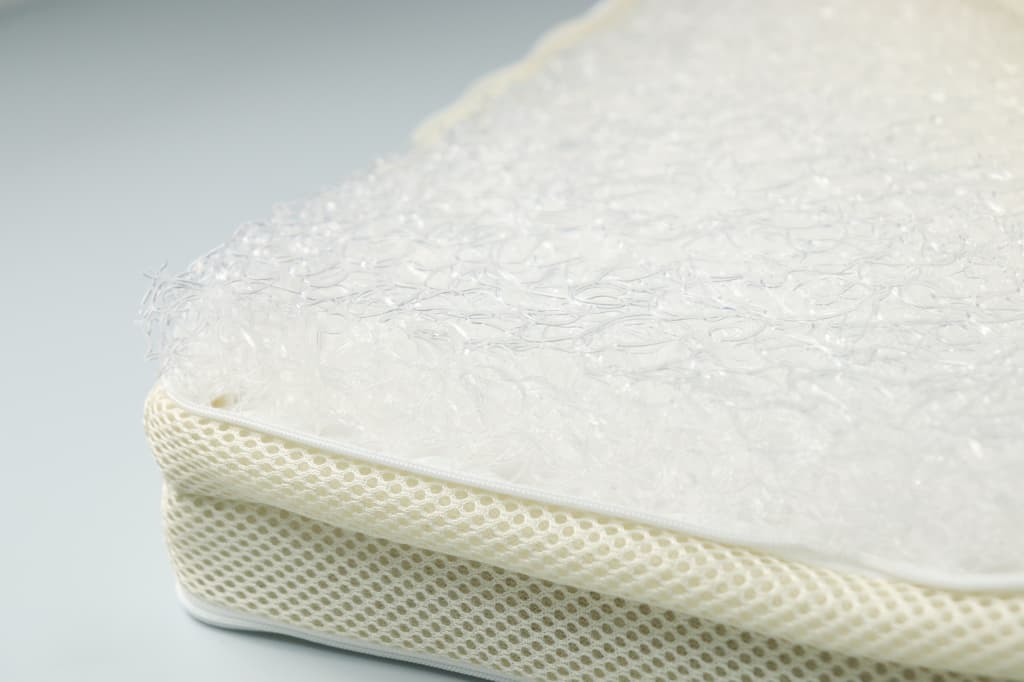
At first sight, POE air fiber looks simple. It is a transparent, three-dimensional structure made from many interconnected elastic fibers.
However, after developing POE mattresses for babies, kids, teenagers and adults, we have learned an important lesson:
A good POE air fiber mattress cannot be judged by density or thickness alone.
Raw material quality, density, thickness, fiber diameter, internal structure, cover fabric and production process can all change the final performance.
This guide explains POE air fiber from a product development and B2B sourcing point of view.

What Is POE Air Fiber?
POE air fiber is made from a PE-based material blend.
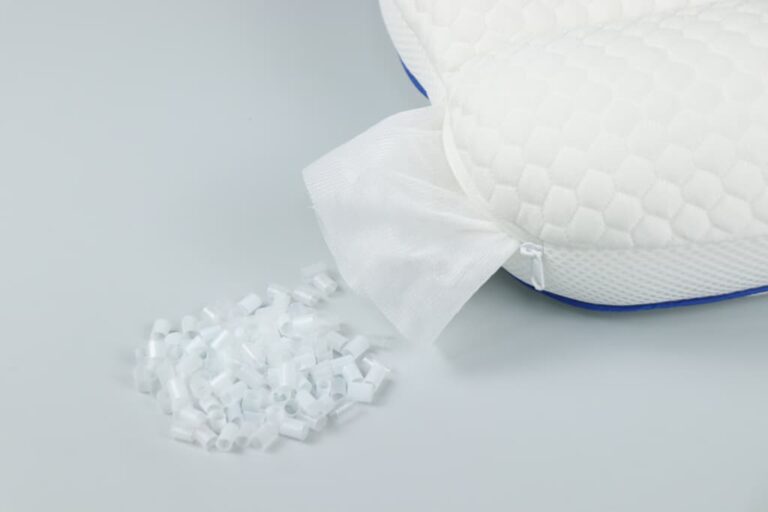
During production, the raw materials are melted and extruded through many small openings. The continuous fibers cross and connect with each other, then cool and form in water.
This creates a large, open three-dimensional structure.
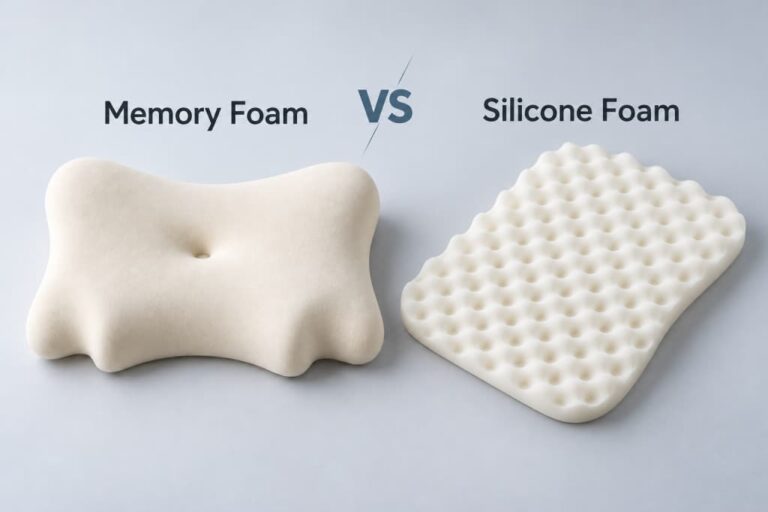
It is very different from conventional foam.
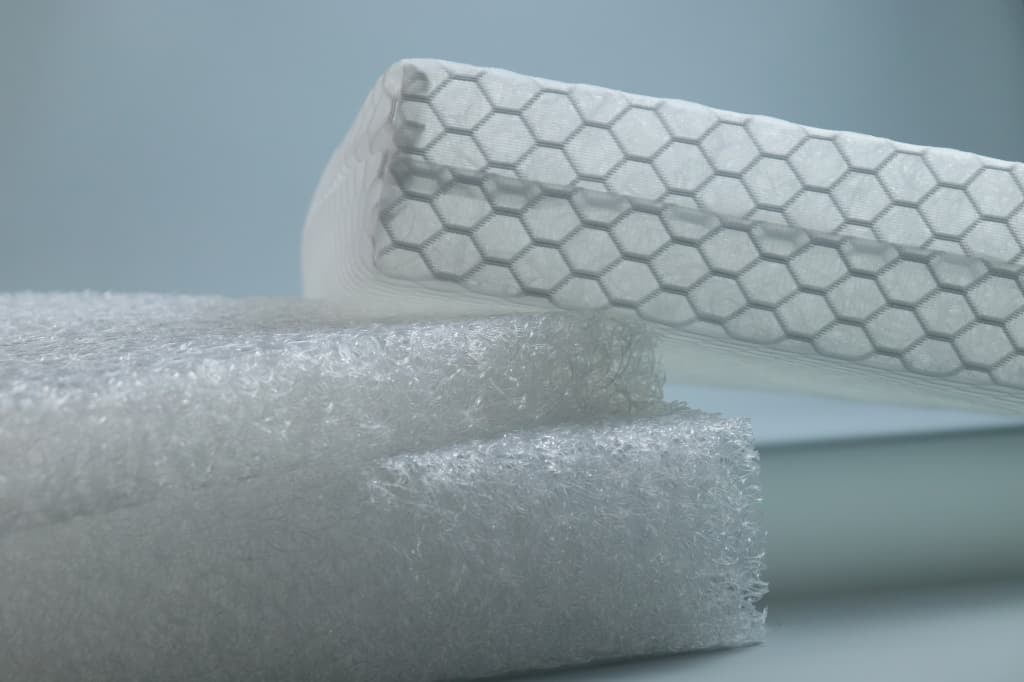
Foam has many small cells inside a solid block. POE air fiber has much larger open spaces between its connected fibers.(
)
This structure gives the material several useful characteristics:
- Air can move through the core.
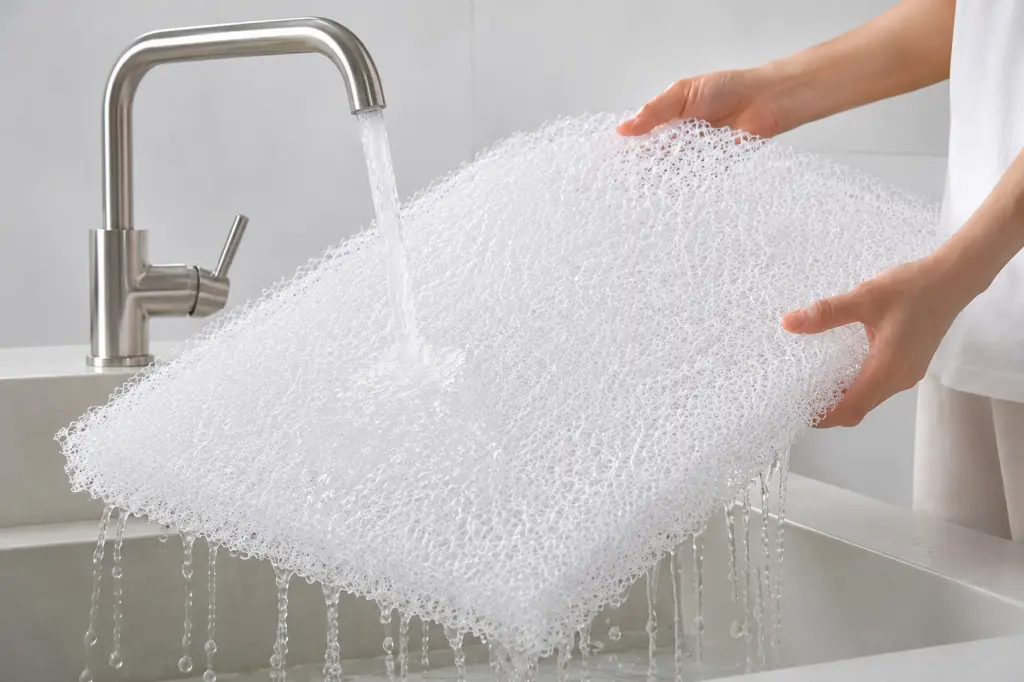
- Water can drain through the structure.
- The core can be formed without glue.
- The material can be rinsed directly.
- The inside of the core remains visible.
For the POE materials used in our current mattress projects, testing can be provided for food-contact-related requirements, REACH SVHC, RoHS, anti-mite performance and durability.
These tests should always be understood according to their actual scope rather than being treated as one general mattress certification.
For current information about substances of very high concern under REACH, buyers can refer to the European Chemicals Agency — REACH Candidate List Information.
Food-contact requirements are different from mattress regulations. Buyers who want to understand how food-contact substances are defined can refer to the U.S. FDA — Food Contact Substances guidance.

Why Do Brands Choose POE Air Fiber for Washable Mattresses?
From our experience, brands normally focus on three advantages first:
washability, airflow and visible cleanliness.
1. The Core Can Be Washed Directly
For many brands, this is the strongest reason to consider POE air fiber.
POE itself does not absorb water like a sponge.
Water can stay temporarily on the fiber surface, but the open spaces allow it to drain much more easily than from dense foam structures.
The core can normally be:
- rinsed directly with water;
- soaked for cleaning;
- cleaned with common mild cleaning agents;
- air dried after washing.
We normally do not recommend putting a standard POE core into a washing machine.
High-temperature tumble drying is also not recommended because excessive heat or long heating periods may damage the fiber structure.
For hollow-fiber versions, we normally recommend placing the core vertically after washing so that any remaining water can drain more easily.
What Does “Quick Dry” Really Mean?
Quick dry does not mean that the core becomes completely dry immediately.
POE itself absorbs very little water. Most water stays on the fiber surface or between the open spaces.
Because the structure is open, water can drain away quickly and air can continue moving through the core.
This is very different from dense foam or fiber-filled materials, where moisture can stay trapped deeper inside the structure.
2. Air Can Move Through the Complete Core
A conventional foam mattress is still a relatively dense block, even when open-cell foam is used.
POE air fiber is different.
The large spaces between the fibers allow air, body heat and moisture to move through the structure.
This makes it especially interesting for mattresses where ventilation is an important design requirement.
But there is one important point:
A breathable core does not automatically make a breathable mattress.
If a highly breathable POE core is covered with a dense waterproof layer or a very low-airflow fabric, much of the airflow advantage can be lost.
The complete mattress must be designed as one system.
3. Consumers Can See the Inside
Good-quality virgin-material POE normally has a clean, transparent and slightly glossy appearance.
This matters more than many buyers expect.
Consumers can see the internal structure instead of looking at an opaque block of foam.
For products focused on washing and hygiene, visible cleanliness can become part of the product value.
Density Does Not Tell You the Whole Story
One of the most common questions we receive is:
“What density should I choose?”
POE density is normally expressed in the same way as foam density.
For example:
55D means approximately 55 kg/m³.
Density is important, but it is not enough to define firmness.
In real production, firmness and sleeping feel can also be affected by:
- core thickness;
- material formulation;
- fiber diameter;
- fiber arrangement;
- open-space ratio;
- forming process;
- surface structure;
- dual-firmness construction.
This is why two POE cores with the same density may not feel the same.
A Practical Density Example
For an approximately 8 cm thick POE core, our development experience is roughly:
| Density | Typical Feel | Common Development Direction |
|---|---|---|
| 45D | Soft and flexible | Kids |
| 55D | Denser with stronger support | Teenagers |
| 60D | Firm with stronger rebound | Adults |
These are product-development references, not universal medical or age standards.
The final selection should also consider:
- mattress thickness;
- user weight;
- required firmness;
- cover construction;
- final product positioning.
For example, a 55D / 4 cm core normally feels firmer than a 55D / 8 cm core.
Very thin POE cores also behave differently.
In our experience, 2–3 cm cores usually require higher density, but they may still feel hard because there is not enough vertical space for the structure to show its elastic rebound.
For mattress products, approximately 4 cm and above is often a more practical starting point.
Why Two POE Cores With the Same Specification Can Feel Different
This is one of the most important sourcing lessons.
Imagine two suppliers offer:
- 60D density
- 6 cm thickness
- the same dimensions
The specifications look identical.
But the performance may still be very different.
Raw Material Quality Matters
In our experience, good virgin material normally produces:
- cleaner appearance;
- better transparency;
- less noticeable odor;
- faster and more even rebound;
- better fatigue resistance.
Lower-quality material may feel more like hard plastic.
The rebound can feel rigid instead of elastic, and individual fiber connection points may be easier to damage during compression.
After longer use, poor structures can also develop more obvious permanent depressions.
This is why a very low quotation should not automatically be considered a better offer.
A Simple Buyer Check for POE Air Fiber
A hand check cannot replace laboratory testing, but it is useful when comparing samples.
We normally look at six things.
Look
The material should appear clean, transparent and reasonably glossy.
Touch
The surface should feel smooth, without many abnormal raised fibers.
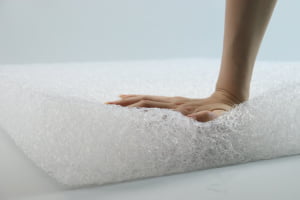
Press
The core should recover quickly and evenly.
There should be no obvious cracking or breaking sensation.
Smell
There should not be a strong plastic odor.
Fold Lightly
Gentle bending should not immediately create a permanent crease.
Check Recovery Over Time
A sample that looks good on day one should still maintain its thickness and rebound after repeated use.
For important projects, buyers should evaluate the sample after longer periods rather than judging only the first impression.
A Real Development Lesson: Matching Density Is Not Enough
A Japanese customer once sent us a POE reference sample.
The specification was:
- 60D density;
- 6 cm thickness.
The sample had good support and very even rebound.
Our first production trial matched both density and thickness.
But when we compared the two samples by hand, the rebound still felt different.
The specification was correct.
The performance was not.
We then adjusted:
- the raw material formulation;
- production tooling;
- fiber diameter.
After several adjustments, the rebound became much closer to the customer’s original reference.
We recorded the final production parameters in detail and continued using the same process for repeat orders.
Mefiss Factory Insight
Matching density does not mean matching performance.
For long-term B2B sourcing, an approved physical sample should remain part of the quality standard.
How Durable Can POE Air Fiber Be?
Durability depends strongly on material quality and structure.
One practical example from our own long-term use involved:
- user weight: around 80 kg;
- user height: around 180 cm;
- POE thickness: 5 cm;
- density: 55D;
- use period: around two years.
After this period, there was only slight thickness loss around the waist and hip area.
The overall support remained usable and the rebound was still fast.
This should not be interpreted as a universal service-life guarantee.
It is simply one practical example showing why raw material quality and production stability matter in addition to density.
Can POE Air Fiber Have Two Different Firmness Levels?
Yes.
A POE mattress core can be designed with different firmness levels on the two sides.
For example:
45D on one side
and
55D on the other side
The two sections are not simply finished separately and glued together.
During production, different extrusion structures can operate together so the fibers connect during forming.
The two sides can even use different colors.
This gives brands a clear product feature:
One mattress with two firmness options.
However, dual-firmness production is more complicated.
Production speed is lower, equipment adjustment takes longer, and material loss before stable production is higher.
In our experience, dual-firmness construction can cost around 10% more than a comparable single-firmness core, depending on the specification.
Real Product Example: FBC-3C Foldable Washable POE Baby Mattress
A useful example is our:
FBC-3C Foldable Washable 4D POE Air Fiber Baby Mattress
It is mainly developed for the Japanese market.
Common sizes include:
- 60 × 90 cm
- 70 × 120 cm
Instead of putting a POE core inside a simple fabric cover, the complete mattress structure was designed around the characteristics of POE.

Why Is FBC-3C Foldable?
POE cannot normally be vacuum compressed like conventional foam.
It should also not remain sharply folded for long periods because a permanent crease may develop.
This creates a shipping challenge, especially for larger mattress sizes.
For FBC-3C, the mattress is intentionally designed to fold in half.
This helps:
- reduce package length;
- improve protection during parcel delivery;
- lower shipping cost;
- make home storage easier.
For larger adult mattresses, two-fold or three-fold structures can also be considered.
A large mattress does not always need a visibly segmented outer cover.
Separate POE core sections can be placed inside one continuous mattress cover and still create a flat sleeping surface.
For larger mattress projects, separate sections can even use different densities in different zones.
For example, the waist and hip area can use a higher density than the leg area.
Why Does FBC-3C Use Two Different Sleeping Surfaces?
FBC-3C does not use one basic fabric on both sides.
The two surfaces solve different problems.
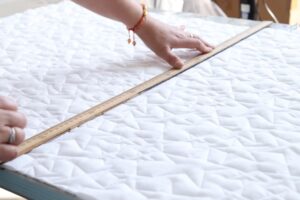
Quilted Washed Cotton Side
The washed cotton side is quilted with a comfort layer.
It provides:
- a softer surface;
- a more familiar mattress feel;
- a fuller appearance;
- comfortable year-round use.
POE provides good elastic support, but it does not naturally create the same soft wrapping feeling as foam.
The cover therefore becomes part of the comfort design.
Spacer Mesh Side
The reverse uses breathable spacer mesh.
This side helps maintain:
- airflow;
- faster moisture release;
- spring and summer comfort;
- resilient surface cushioning.
The mattress therefore gives consumers two different surface experiences.
The dual-firmness POE core adds another level of choice.

Why Do We Often Combine POE Air Fiber With Spacer Mesh?
This may seem unnecessary.
POE is already breathable, so why add another breathable material?
Because the mattress performs only as well as the layers surrounding the core.
A highly ventilated POE core wrapped in a very dense cover will not provide the same airflow as a complete breathable construction.
We therefore often use spacer mesh for:
- sleeping surfaces;
- mattress sides;
- bottom panels;
- inner core covers.
There is another reason.
POE is supportive, but its surface comfort is usually not as soft as foam.
Spacer mesh and thicker 3D mesh have their own elastic structures, so they can add surface cushioning while still allowing air and moisture to move through the mattress.
Mefiss Textile, our own warp-knitted fabric factory, produces the spacer mesh used in many of these projects.
This allows us to develop the mattress cover and core structure together instead of treating them as unrelated components.
A Breathable Core Can Be Ruined by the Wrong Cover
This is another common development mistake.
A buyer may choose POE because it is breathable and washable, then request a heavily waterproof outer cover.
The result can be:
a breathable core inside an airflow barrier.
Waterproofing and breathability always need to be balanced.
In some projects, we prefer to:
- keep the mattress itself breathable;
- use a separate waterproof fitted protector;
- make one sleeping surface removable;
- use washable and replaceable panels.
This preserves more of the original POE airflow while still making daily cleaning easier.
POE Air Fiber Is Not Perfect
We do not recommend POE for every product.
It has real limitations.
It Cannot Be Vacuum Compressed Like Foam
Shipping volume is normally larger.
Foldable or modular structures can help, but transportation still needs to be considered early in product development.
Material Cost Is Higher
POE normally costs more than common PU foam and many conventional mattress materials.
Complex Shapes Are More Difficult
POE is formed from extruded fibers.
Very complicated curves and molded structures can therefore be less economical than molded foam.
The Sleeping Feel Is Different From Foam
POE provides elastic support and rebound.
However, for consumers who want a very soft, body-wrapping feeling, traditional foam may feel more comfortable.
That is why we often combine POE with:
- quilted fabrics;
- spacer mesh;
- 3D mesh;
- other comfort layers.
What Determines the Cost of POE Air Fiber?
POE quotations should not be compared only by size and thickness.
Important cost factors include:
Raw Material Grade
Virgin materials and different formulations affect feel, transparency, durability and rebound.
Density
Higher density normally requires more raw material.
Thickness
Interestingly, very thin POE cores below around 4 cm can have a higher unit cost because production efficiency is lower.
Dual Firmness
Two structures inside one core require more complicated production.
Size and Shape
Small, irregular or complex shapes require more cutting and labor.
Color
A custom color may increase unit cost only slightly, but it can significantly increase MOQ because special color masterbatch must be prepared and the production line needs to be cleaned after production.
Special Tooling
Complex shapes may require dedicated molds or production tooling.
This is why two quotations for “the same” POE mattress can still be very different.
POE Air Fiber vs Other Mattress Core Materials
POE should not be presented as the best material for every application.
Different materials solve different problems.
POE Is Strong When the Product Needs:
- direct washability;
- strong airflow;
- quick drainage and drying;
- visible internal cleanliness;
- stable elastic support;
- customizable density;
- dual-firmness design.
Traditional Foam May Be Better When the Product Needs:
- very low cost;
- very soft body contouring;
- complex molded shapes;
- vacuum compression;
- a very soft wrapping feel.
Latex May Be Better When:
- very even pressure distribution;
- traditional latex comfort;
- established consumer recognition
are the main priorities.
In our experience, POE generally offers easier rinsing, faster drying and a more open airflow structure than latex.
Latex, however, can provide a more uniform and familiar comfort feel.
The right question is therefore not:
Which material is best?
It is:
Which material fits the product we are trying to develop?
Three Purchasing Lessons From Our POE Projects
1. Be Careful With Unusually Low Prices
If one quotation is much lower than others, do not compare density and thickness only.
Check:
- raw material;
- smell;
- transparency;
- rebound;
- long-term recovery.
Very cheap POE may create much higher after-sales costs later.
2. Keep an Approved Physical Sample
A written specification cannot completely describe hand feel and rebound.
The approved sample should remain part of the quality standard for repeat orders.
Density, size and thickness tolerances should also be clearly agreed.
3. Ask for Reports Relevant to the Actual Specification
Do not automatically assume that one test report covers every POE density and thickness.
For long-term programs, buyers should ask the supplier to clearly identify which material specification is represented by each report.
Understanding REACH, Food-Contact and RoHS References
Buyers often see these terms placed together on supplier websites, but they do not mean the same thing.
REACH / SVHC
The EU REACH framework includes obligations related to substances of very high concern in articles.
For current requirements, refer to:
European Chemicals Agency — REACH Candidate List Information
Food-Contact Testing
Food-contact testing relates to materials intended to come into contact with food under applicable requirements.
It should not be described as a general mattress safety certification.
For more information, refer to:
U.S. FDA — Food Contact Substances
RoHS
The EU RoHS Directive mainly restricts certain hazardous substances in electrical and electronic equipment.
For a mattress material, a RoHS report should therefore be treated as additional material information rather than a general mattress certification.
For more information, refer to:
European Commission — RoHS Directive
FAQ
Is POE Air Fiber washable?
Yes. The POE air fiber used in our mattress projects can normally be rinsed directly with water. We recommend air drying and avoiding prolonged high-temperature drying.
Does higher POE density always mean better quality?
No. Density affects firmness and support, but material quality, thickness, fiber diameter, structure and production process also affect performance.
What does 55D POE Air Fiber mean?
In our specifications, 55D means approximately 55 kg/m³. It should be evaluated together with core thickness and required firmness.
Can POE Air Fiber have different firmness on each side?
Yes. Dual-firmness cores can use different fiber structures and densities on the two sides. Production is more complicated and normally costs more than a single-firmness core.
Why use spacer mesh if POE is already breathable?
Because the outer layers also control airflow. Spacer mesh helps maintain ventilation through the finished mattress while adding resilient surface cushioning.
Can POE Air Fiber be vacuum packed?
Normally, we do not recommend vacuum compressing it like conventional foam. Foldable or modular mattress structures are usually better solutions for reducing shipping size.
What should a B2B buyer check before ordering POE Air Fiber?
Important points include raw material type, density, thickness, firmness, size, dual-firmness requirement, recovery performance, test reports, MOQ, lead time and an approved physical sample.
Final Thoughts
POE air fiber is often described simply as a breathable mattress core.
That description misses much of its value.
For many of the products we develop, the real advantage comes from combining:
washability + airflow + visible cleanliness + elastic support + structural customization
However, the core is only one part of the finished mattress.
A successful POE mattress also requires the correct:
- density;
- thickness;
- raw material;
- surface comfort;
- cover structure;
- cleaning method;
- packaging design;
- quality standard.
FBC-3C is a good example.
The POE core, dual firmness, foldable construction, quilted cotton surface and spacer mesh reverse are designed as one system rather than separate components.
So when starting a new project, the first question should not be:
“How much is an 8 cm POE core?”
A better starting point is:
“Who will use the mattress, how firm should it feel, how will it be cleaned, and how should the complete mattress manage heat and moisture?”
Once these questions are clear, density, thickness, cover structure and cost become much easier to define.
Developing a Washable POE Air Fiber Mattress?
Mefiss supports OEM and ODM development for baby, kids, teen and adult mattresses.
We can develop:
- POE core density and thickness;
- single or dual firmness;
- modular and foldable structures;
- spacer mesh and 3D mesh covers;
- quilted comfort surfaces;
- sizes, colors and packaging.
Tell us your target user, mattress size, desired firmness and target market. We can recommend a practical starting structure for sampling.