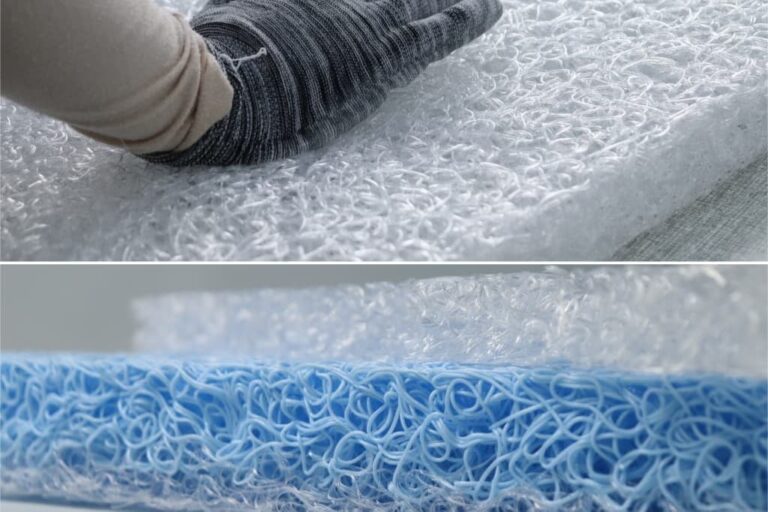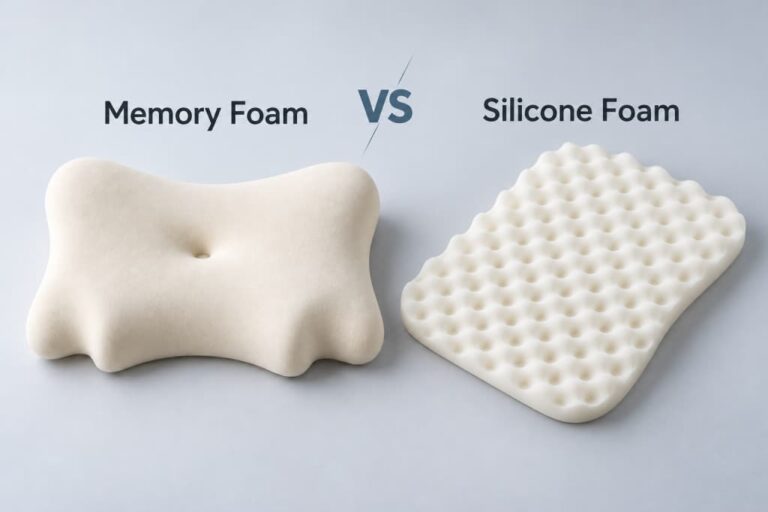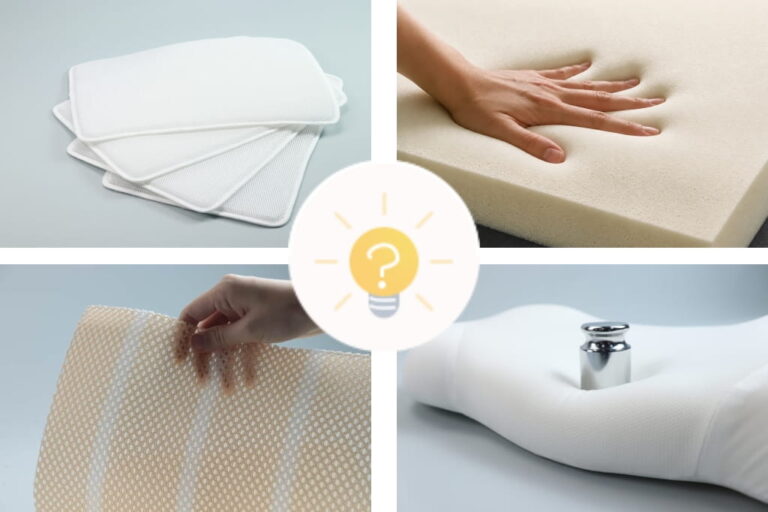
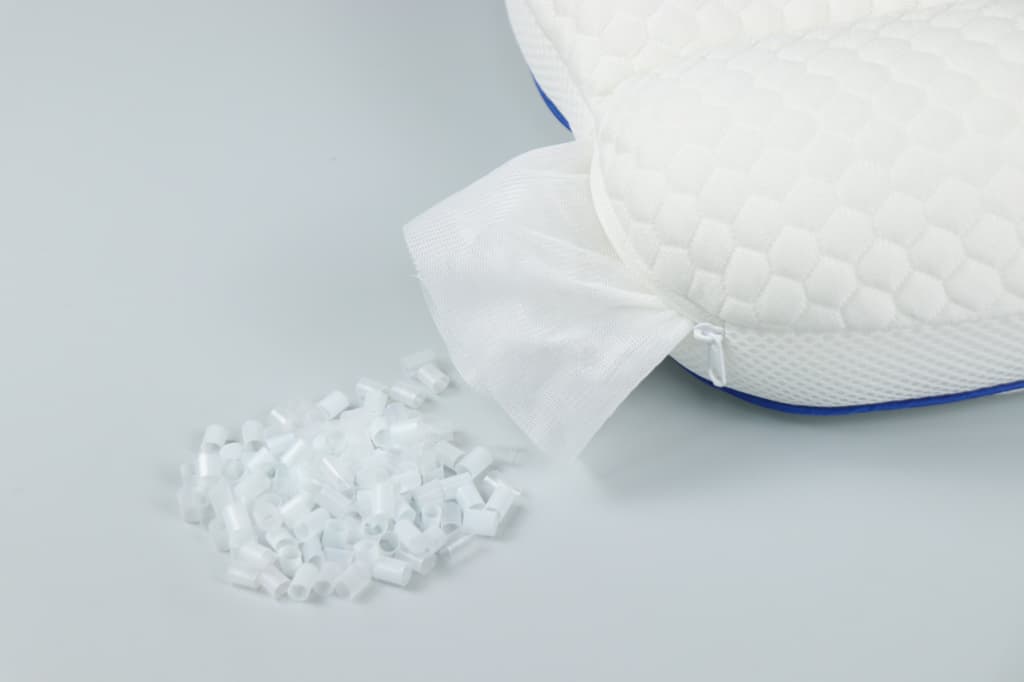
TPE tube and polyester fiber create different support experiences in adjustable pillows. We use TPE tube for defined support zones and Snow Ball Fiber for soft, lofty cushioning. By combining these materials in separate zones, we can develop pillows with distinct support and comfort characteristics.
At Mefiss Hometex, we develop adjustable pillows using different filling materials, compartment structures, and height-adjustment systems. Our FBA-70H adjustable mesh kids pillow combines TPE tube, antibacterial and anti-mite fiber, and removable 3D mesh inserts. Our FBA-211 zoned kids pillow demonstrates how we use different filling configurations and neck heights for different age groups.
1|TPE Tube vs Polyester Fiber: Key Differences
TPE tube and Snow Ball Fiber serve different purposes inside an adjustable pillow. We select each material according to the function of the filling zone.
| Feature | TPE Tube | Snow Ball Fiber |
|---|---|---|
| Composition | Thermoplastic elastomer (TPE) | 100% polyester fiber |
| Main role | Defined, distributed support | Soft, lofty cushioning |
| Structure | Hollow elastic tubes | Resilient polyester fibers |
| Typical application | Neck support zones and adjustable sections | Softer support zones and pillow body filling |
| Adjustment method | Filling quantity, separate compartments, and drawstring structures | Filling quantity and distribution |
1.1|TPE Tube for Defined Support
TPE tube is a hollow thermoplastic elastomer filling. Its tubular structure allows air to move through the spaces between the tubes, while the filling can move within a designated compartment.
We use TPE tube in pillow designs that require more defined support, particularly in neck support zones. It can also be incorporated into separate filling chambers and drawstring adjustment systems to create different support profiles.
For adjustable pillow development, we establish the filling layout and quantity for each zone during sampling, then check the finished height and support feel against the approved sample.
1.2|Snow Ball Fiber for Soft, Lofty Cushioning
Snow Ball Fiber is made from 100% polyester fiber. Its fluffy structure creates a soft, full feel and resilient cushioning, making it suitable for pillow areas that need a softer touch.
We use Snow Ball Fiber in several pillow designs, including the FBA-211 zoned kids pillow. We can also apply antibacterial and anti-mite treatment to suitable fiber fillings using our microwave treatment process without adding chemical agents.
For brands developing adjustable pillows, Snow Ball Fiber provides a filling option for softer zones, while TPE tube can be used in areas designed for more defined support.
2|Why Combine Different Fillings in One Pillow?
A pillow does not need to use the same filling throughout its entire structure. Separate filling zones allow us to assign different materials to different functions within one product.
2.1|Assign Each Material to the Right Zone
For a neck support zone that needs a more defined supporting feel, we can use TPE tube. For an area designed to provide softer cushioning, we can use polyester fiber filling.
Separate compartments keep the fillings in their intended areas and allow us to develop distinct support characteristics within the same pillow. This is particularly useful for zoned pillow designs.
2.2|Real Product Example: Mefiss FBA-70H Adjustable Mesh Kids Pillow
Our FBA-70H adjustable mesh kids pillow combines different filling materials with removable 3D mesh inserts to provide multiple height configurations.
- Lower neck support zone: Filled with TPE tube for adaptive support.
- Higher support zone: Filled with soft antibacterial and anti-mite fiber.
- Height adjustment: Removable 12 mm and 24 mm 3D mesh inserts.
- Combined insert configuration: The 12 mm insert can fit inside the 24 mm insert, forming a combined 36 mm mesh layer.
The filling materials serve different functions within the pillow body, while the removable inserts provide defined height increments. Our design offers five documented configurations for children from 3 months to 6 years, using different combinations of the pillow body and mesh inserts.
This structure demonstrates how filling zones and removable inserts can work together in an adjustable pillow. The filling provides the intended support characteristics, while the mesh inserts change the assembled height.

Explore our FBA-70H Adjustable Mesh Kids Pillow to see how we combine filling zones with removable height-adjustment inserts.
3|Different Filling Plans for Different Age Groups
Another development approach is to create separate pillow models with different heights and filling configurations for different age groups.
3.1|Real Product Example: Mefiss FBA-211 Zoned Kids Pillow
Our FBA-211 zoned kids pillow uses different filling plans and neck heights across three age-group models.
| Target Age | Filling Plan | Initial Neck Height | Height Under Compression |
|---|---|---|---|
| 1–3 years | Snow Ball Fiber | 4 cm | Approximately 2 cm |
| 4–6 years | TPE tube in the neck support zone | 6 cm | Approximately 3.5 cm |
| 7–9 years | TPE tube in the neck support zone | 9 cm | Approximately 4.5 cm |
These figures describe three different FBA-211 product configurations. The models have different initial heights and filling arrangements, so the figures are not a direct comparison of TPE tube and Snow Ball Fiber under identical pressure.
The product series demonstrates how we develop different neck heights and filling configurations for different age groups. Snow Ball Fiber is used in the 1–3-year model, while TPE tube is used in the neck support zones of the 4–6-year and 7–9-year models.

3.2|How We Compare Fillings During Sampling
When we compare filling materials, we prepare samples under the same test conditions. We measure compressed height, observe rebound after pressure is released, and compare the actual hand feel.
Using the same sample dimensions, filling quantity, and pressure conditions gives us a more meaningful comparison of the materials than comparing finished pillows with different heights and filling plans.
4|Filling Adjustment and Production Control
4.1|Choose the Adjustment Method Alongside the Filling
We use TPE tube in designs that combine separate filling zones with drawstring adjustment. For example, our FBA-5M uses TPE tube around the pillow perimeter and three adjustment drawstrings to change the height at different positions.
We also use polyester fiber in designs that need a softer, loftier filling feel. In suitable constructions, the filling quantity can be adjusted to change the pillow height.
Our FBA-70H uses a different method: removable 3D mesh inserts provide defined height increments without relying solely on changes to loose filling quantity.
4.2|Control Filling Quantity and Record the Approved Design
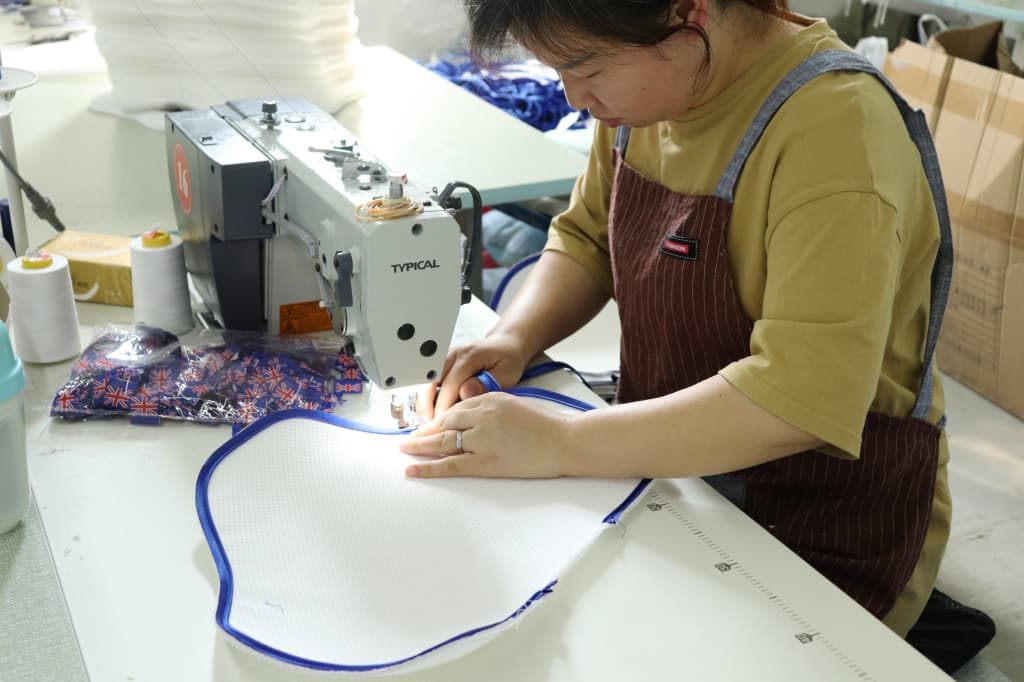
For a pillow with multiple filling zones, we weigh the filling for each product according to the approved specification. This helps us keep filling quantities consistent during bulk production.
After sampling is completed, we record the confirmed product specifications in a dedicated production process sheet. Our bulk production follows this document, including the approved filling materials, product construction, and relevant manufacturing details.
For a new adjustable pillow, we establish the filling material for each zone, target filling quantity, compartment dimensions, finished height, and adjustment method during product development. These details provide a clear reference for the production team.
5|How to Select the Right Filling for Your Pillow Project
When developing an adjustable pillow, we start by identifying the function of each support zone.
- For defined neck support: We consider TPE tube for the relevant filling zone.
- For soft, lofty cushioning: We consider Snow Ball Fiber.
- For different support experiences in one pillow: We design separate filling zones and assign each material to its intended function.
- For defined height increments: We can incorporate removable 3D mesh inserts, as demonstrated by our FBA-70H.
- For material comparison: We prepare samples under the same test conditions and compare compressed height, rebound, and hand feel.
These approaches give brands clear options for developing adjustable pillows with distinct support and cushioning characteristics. We can develop the filling layout, compartment construction, and height-adjustment method around the intended product design.
For additional material options, explore our Mefiss material library and our 3D mesh fabric range from Mefiss Textile. We operate our own fabric weaving factory, Mefiss Textile, to develop spacer mesh materials for breathable pillows and bedding products.
6|Frequently Asked Questions
6.1|What is the difference between TPE tube and polyester fiber in an adjustable pillow?
TPE tube is used for more defined support zones, while Snow Ball Fiber provides soft, lofty cushioning. We use each material according to the function of the filling zone.
6.2|Can TPE tube and polyester fiber be used in the same pillow?
Yes. Our FBA-70H combines TPE tube in the lower neck support zone with antibacterial and anti-mite fiber in the higher support zone. Separate zones allow the materials to perform different functions within the same pillow.
6.3|Can filling quantity be used to adjust pillow height?
Yes. In suitable pillow constructions, changing the filling quantity can change the height. We can also use drawstring adjustment or removable 3D mesh inserts to provide different height settings.
6.4|Can the FBA-211 compression figures directly compare the two materials?
No. The figures describe three different product configurations with different initial heights and filling arrangements. To compare the materials directly, we test samples under the same conditions.
6.5|What information should a brand provide when developing an adjustable pillow?
Please provide the target age group, pillow dimensions, required support zones, target height, preferred hand feel, adjustment method, cover requirements, and estimated order quantity. We use these details to develop the filling structure and prepare the product sample.
7|Conclusion: Design the Filling Around the Support Function
TPE tube and Snow Ball Fiber serve different purposes in adjustable pillow development. TPE tube is suited to more defined support zones, while Snow Ball Fiber creates soft, lofty cushioning. We can combine these materials in separate zones to create a pillow with different support characteristics.
Our FBA-70H demonstrates how TPE tube, antibacterial and anti-mite fiber, and removable 3D mesh inserts work together in an adjustable pillow. Our FBA-211 demonstrates a different approach, using different filling plans and neck heights across three age-group models.
For brands developing adjustable pillows, we define the function of each zone, select the corresponding filling material, and confirm the finished structure through sample evaluation before bulk production.
Develop Your Adjustable Pillow with Mefiss Hometex
Planning an adjustable pillow for your brand? Share your target age group, pillow dimensions, support requirements, preferred filling materials, height-adjustment method, and estimated order quantity. We can help develop the filling zones and product construction for your design.
Explore Our FBA-70H Adjustable Mesh Kids Pillow | Explore Our Products | Contact Mefiss Hometex