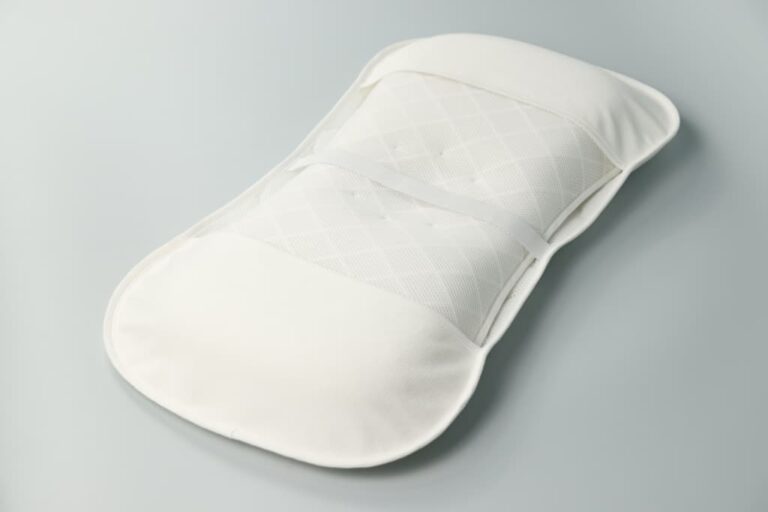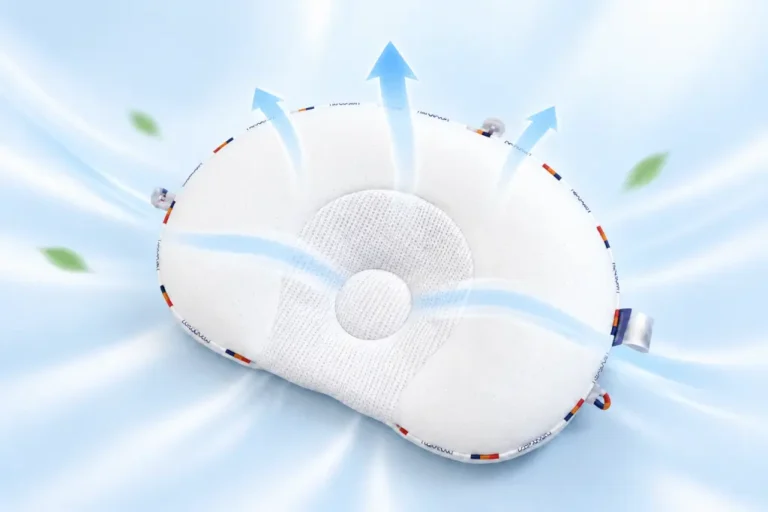

A washable mattress sounds simple.
Use a washable cover. Use a washable core. Add a zipper.
But in real product development, that is not enough.
A truly washable mattress has to work as a complete system.
The core, cover, inner layer, airflow, drying method, firmness, packaging and target market all affect whether the finished product is actually practical to wash and use.
After developing washable mattresses for baby, kids, teen and adult applications, we have learned one important rule:
Washability should be designed from the beginning, not added at the end.
This guide explains the main decisions a brand should make before developing a washable mattress.
1. Start With the Cleaning Method
Before choosing the mattress material, define how the user is expected to clean the product.
This sounds basic, but it changes almost every other design decision.
Ask:
- Will users wash only the cover?
- Will they rinse the core?
- Can the mattress be soaked?
- Will it be cleaned frequently?
- Should the complete mattress dry naturally?
- Is machine washing required?
- Is high-temperature cleaning required?
These are different product requirements.
For example, a removable fabric cover can be machine washed, while a large mattress core may need direct rinsing and air drying.
If the brand simply says “fully washable” without defining the actual cleaning process, product development can quickly become confusing.
Mefiss Insight
We normally separate washable mattress design into three levels:
Level 1 — Washable Cover Only
The cover can be removed and washed, but the core is not intended for regular washing.
Level 2 — Washable Cover + Rinse-Clean Core
The cover is removable, and the core can be rinsed directly with water.
Level 3 — Full Washable System
The cover, core and internal protective layers are all selected so they can be cleaned and dried separately.
For POE air fiber mattress projects, Level 2 and Level 3 are usually the most practical directions.
2. Choose the Core Material Around the Cleaning Requirement
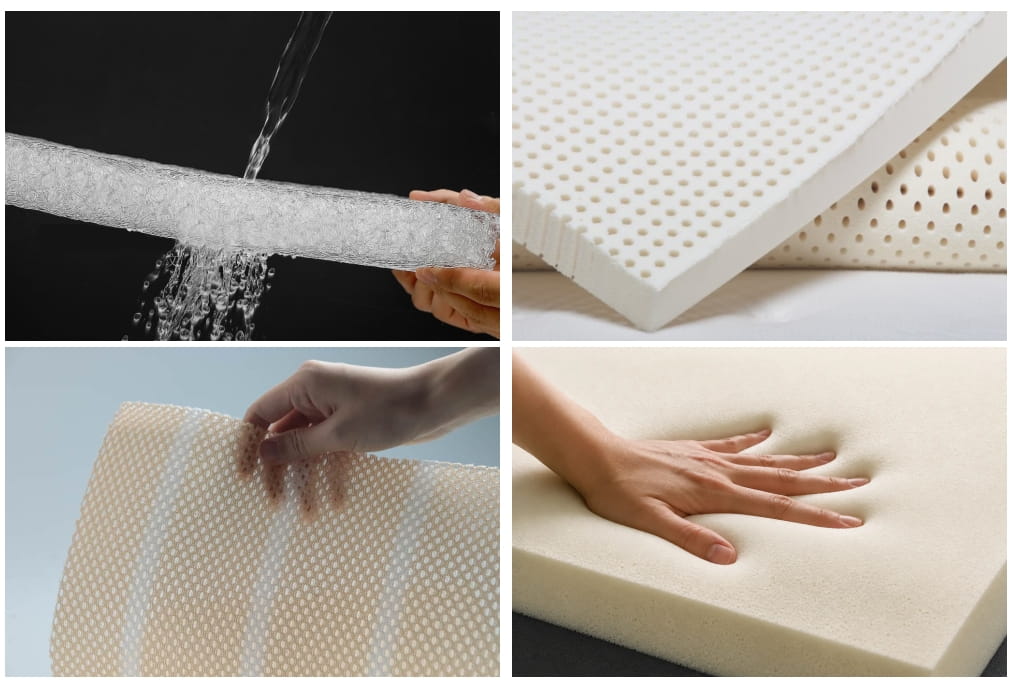
Not every mattress core behaves well with water.
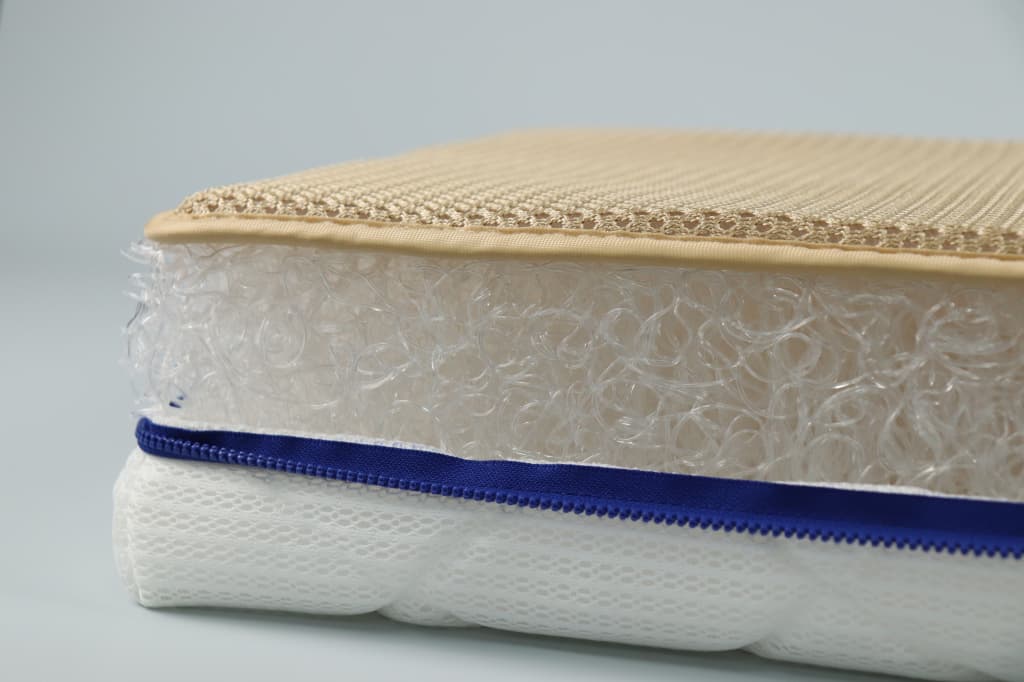
POE Air Fiber
POE air fiber is useful when direct core washing is important.
Its open structure allows water to pass through and drain relatively quickly.
The core can normally be rinsed and air dried.
It also provides:
- strong airflow;
- visible internal cleanliness;
- customizable density;
- dual-firmness options.
Memory Foam
Memory foam can provide excellent contouring and pressure relief, but direct core washing is normally less practical.
Water can enter the foam structure and drying can take a long time.
For this reason, memory foam mattresses are often designed around a removable washable cover rather than regular washing of the foam itself.
Latex
Latex can provide very even support and good comfort, but thick latex cores are also not the easiest materials to rinse and dry.
3D Mesh Core
A 3D mesh core can be very breathable and washable, but thick constructions may require several layers and additional cutting, sewing or bonding.
This can increase cost.
The correct core depends on the product goal.
A washable mattress does not need the same material for every market or price level.
3. Do Not Choose Firmness by Density Alone
For POE air fiber, buyers often ask for a density first.
For example:
“Please quote 55D.”
But density is only one part of the final feel.
Firmness can also change with:
- core thickness;
- fiber diameter;
- material formulation;
- fiber arrangement;
- surface construction.
For example, the same 55D material can feel different at 4 cm and 8 cm thickness.
A thinner core often feels harder because there is less space for the fiber structure to deform and rebound.
For an approximately 8 cm POE core, our development experience is roughly:
| Density | Typical Feel | Development Direction |
|---|---|---|
| 45D | Softer | Kids |
| 55D | Medium to firm | Teenagers |
| 60D | Firmer | Adults |
These are practical development references, not universal medical standards.
The target user, body weight, mattress thickness and cover construction should always be considered together.
4. Design the Cover as Part of the Mattress, Not Decoration
This is one of the biggest mistakes we see in mattress development.
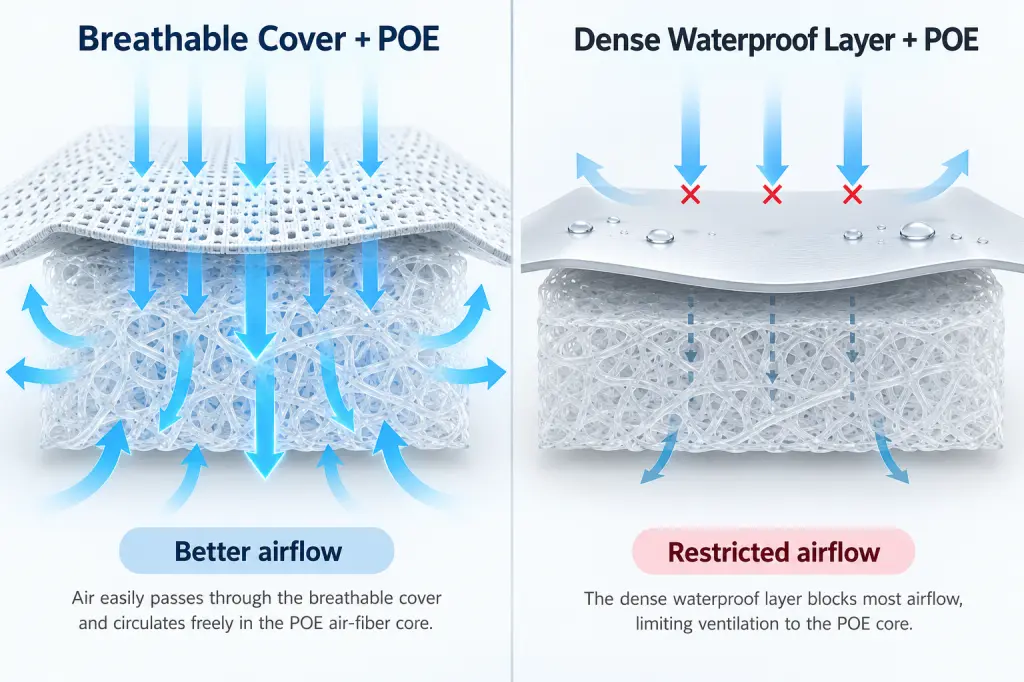
A brand spends time choosing a highly breathable washable core, then adds a thick or poorly breathable cover.
The final product loses much of the original material advantage.
For washable mattress projects, the cover should be designed around three functions:
Comfort
POE air fiber can feel firmer and more springy than foam.
A quilted surface or thicker spacer mesh can improve contact comfort.
Airflow
If the mattress is marketed as breathable, the cover should allow air and moisture to move through the structure.
Cleaning
The cover should be easy to remove, wash and reinstall.
These three requirements need to work together.
5. Waterproof and Breathable Are Not the Same Thing
Many buyers want both:
maximum waterproofing
and
maximum airflow
These two goals can conflict.
A strong waterproof membrane may reduce airflow through the sleeping surface.
For a mattress built around a highly open POE core, this can reduce one of the main reasons for choosing POE.
One practical solution is:
- keep the mattress itself breathable;
- use a separate waterproof fitted protector;
- or make one sleeping surface removable and replaceable.
This gives the brand more flexibility.
Mefiss Insight
We normally prefer not to make every mattress layer fully waterproof unless the application really requires it.
For many home and kids products, a separate washable waterproof protector is easier to replace and allows the main mattress to maintain better airflow.
6. Make the Mattress Easier to Dry
Washability is only useful if the product can dry properly.
The core should not trap large amounts of water.
The cover should not remain wet for too long.
The construction should also avoid unnecessary closed layers where moisture can stay trapped.
For POE air fiber, we normally recommend:
- direct rinsing with water;
- avoiding prolonged high-temperature drying;
- natural air drying;
- placing hollow-fiber versions vertically when necessary to help drainage.
The mattress design should also allow users to separate the cover and core before drying.
This reduces drying time and makes the cleaning process easier.
7. Think About the Surface Feel
A washable mattress can be technically excellent but still fail if it does not feel comfortable.
This is especially important for POE products.
POE provides resilient support, but it normally does not have the same soft wrapping feel as memory foam.
A brand can improve the surface with:
- quilted cotton;
- Lyocell fabric;
- spacer mesh;
- 3D mesh;
- breathable fiber filling;
- thin comfort layers.
The goal is to improve comfort without blocking airflow.
Real Product Example: FBC-3C Foldable Washable 4D POE Air Fiber Baby Mattress
A useful example is our FBC-3C Foldable Washable 4D POE Air Fiber Baby Mattress.
Common sizes include:
- 60 × 90 cm
- 70 × 120 cm
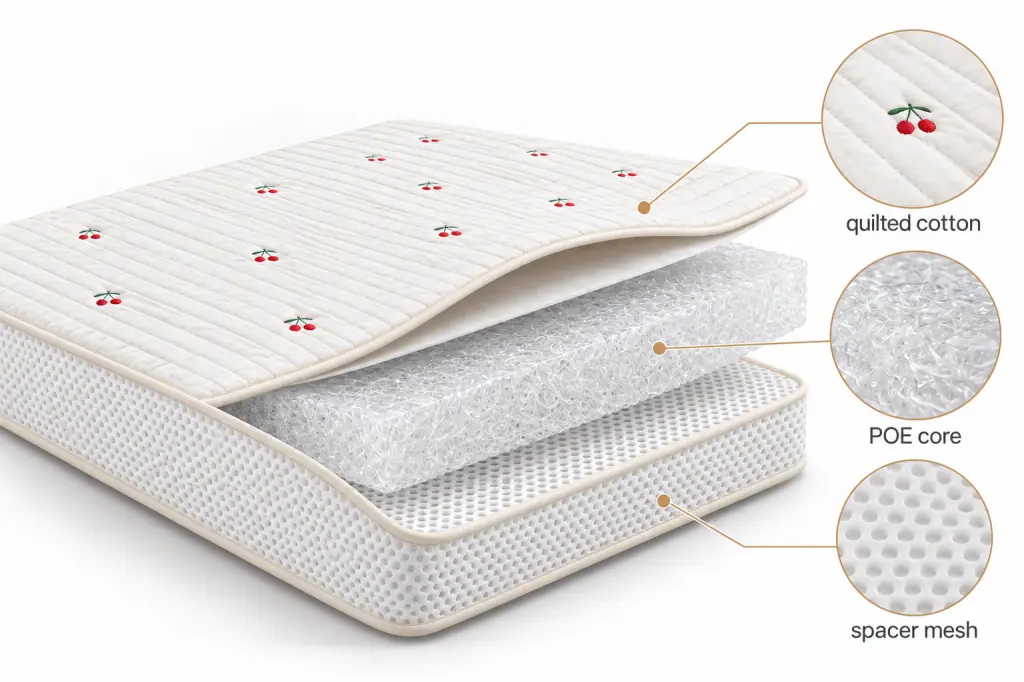
The mattress combines:
- dual-firmness POE air fiber core;
- quilted washed cotton sleeping surface;
- soft 4 mm spacer mesh reverse;
- breathable spacer mesh sides;
- foldable construction.
The product was mainly developed for the Japanese market.
The important point is that every part of the mattress solves a different problem.
Why Use a Quilted Cotton Side?
The front uses washed cotton with a quilted comfort layer.
This gives the mattress:
- a softer hand feel;
- a fuller appearance;
- more familiar sleeping comfort;
- better year-round usability.
POE is highly functional, but the core itself is not designed to provide every comfort function.
The quilted surface makes the finished product easier for consumers to accept.
Why Use Spacer Mesh on the Other Side?
The reverse uses 4 mm spacer mesh.
This helps preserve:
- airflow;
- moisture transfer;
- quick drying;
- resilient surface support.
The mattress therefore provides two different experiences:
comfort-focused side
and
airflow-focused side
The dual-firmness POE core adds another level of differentiation.
8. Consider Foldable or Modular Structures Early
POE air fiber normally cannot be vacuum compressed in the same way as conventional foam.
This means shipping volume can become a real commercial problem.
For FBC-3C, the mattress folds in half.
This helps reduce package length and makes the mattress easier to store.
For larger mattresses, we may consider:
- two-fold structure;
- three-fold structure;
- separate internal core sections.
A large outer cover can still remain continuous.
The core sections fit together inside the cover to create a flat sleeping surface.
This also creates another development opportunity:
different sections can use different densities.
For example:
- higher density around the waist and hips;
- lower density around the legs.
This gives brands another way to create differentiated products.

9. A Fully Washable Mattress Does Not Have to Be 100% POE
This is another useful cost insight.
If the product needs 8 cm of core thickness, the full 8 cm does not always need to be POE.
A hybrid structure could use:
5 cm POE Air Fiber + 3 cm Foam
This can provide:
- lower material cost;
- a softer comfort side;
- a more breathable side;
- different firmness experiences.
Another option is:
- thinner POE core;
- thicker 3D mesh;
- quilted comfort layer.
The best solution depends on the product positioning.
Mefiss Insight
A more expensive material is not automatically better when used at maximum thickness.
For B2B product development, the goal is to find the right balance between:
performance + comfort + cost + shipping
10. Define the Target Market Before Finalizing the Structure
Mattress requirements vary by market and product category.
For the United States, general-use mattresses and mattress sets can be subject to federal flammability requirements under 16 CFR Part 1632 and 16 CFR Part 1633. The U.S. Consumer Product Safety Commission also states that crib mattresses have additional requirements under 16 CFR Part 1241. U.S. Consumer Product Safety Commission
For current U.S. requirements, buyers should refer directly to:
U.S. Consumer Product Safety Commission — Mattresses, Mattress Pads & Mattress Sets
and, for crib mattress projects:
U.S. Consumer Product Safety Commission — Crib Mattresses Business Guidance
The CPSC crib mattress guidance also covers issues such as firmness, fit, thickness, compatibility and labeling, so these factors should be considered early in product development rather than after production is finished. U.S. Consumer Product Safety Commission
11. Decide What “Fully Washable” Means in Your Product Specification
Before approving samples, write the washing requirement clearly.
For example:
Cover
- machine washable or hand washable?
- maximum wash temperature?
- tumble dry or air dry?
- shrinkage requirement?
Core
- rinse clean?
- soak clean?
- maximum water temperature?
- air-dry orientation?
- repeated wash requirement?
Complete Product
- how easy is it to remove the cover?
- can the consumer reinstall it easily?
- does the core keep its size after washing?
- does the mattress maintain firmness after repeated cleaning?
This makes product testing much more useful.
12. Keep an Approved Sample for Mass Production
For long-term orders, do not rely only on a written density number.
An approved sample should be retained.
The production specification should confirm:
- core density;
- density tolerance;
- thickness;
- thickness tolerance;
- mattress dimensions;
- raw material type;
- firmness;
- recovery;
- cover fabric;
- washing method.
This is especially important for POE.
Two samples with the same density and thickness can still feel different if the raw material formulation or fiber structure changes.
A Practical Development Checklist
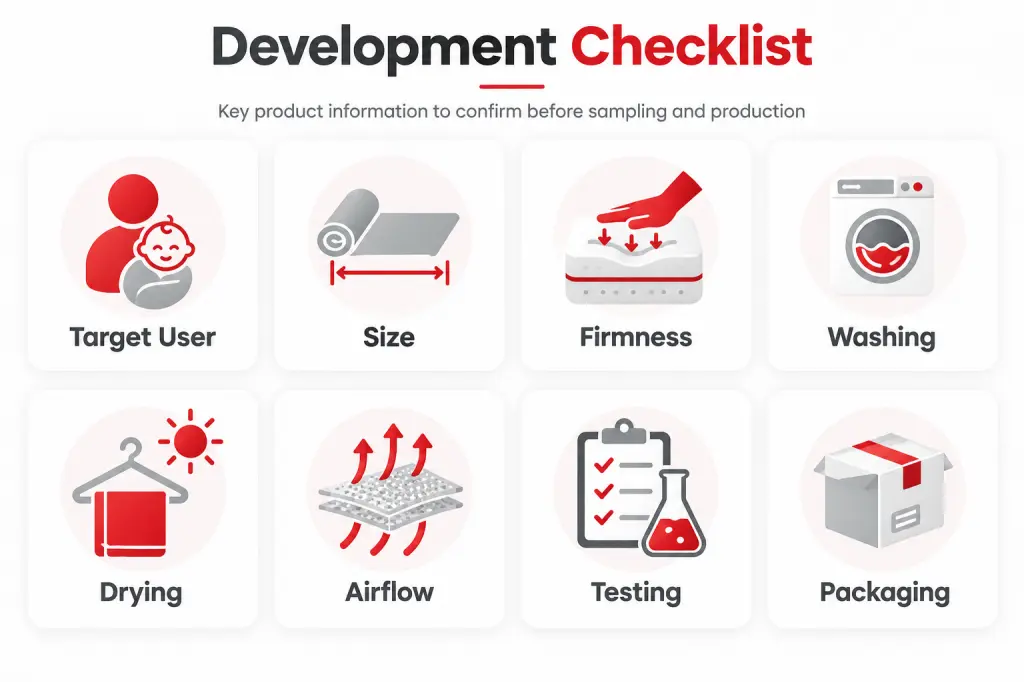
Before asking a factory to quote a washable mattress, prepare these points:
- Target user
- Mattress size
- Total thickness
- Preferred firmness
- Core washing requirement
- Cover washing requirement
- Target drying method
- Breathability requirement
- Waterproof requirement
- Foldable or non-foldable
- Target retail positioning
- Target market
- Required testing
- Estimated order quantity
- Packaging requirement
A clear brief can reduce sample revisions significantly.
FAQ
What is the best core for a fully washable mattress?
There is no single best material. POE air fiber is useful when direct core rinsing, airflow and quick drainage are important. Other materials may be better for softer comfort or lower cost.
Can the whole mattress be machine washed?
Usually not. For larger mattresses, the more practical design is a machine-washable removable cover combined with a rinse-clean core.
Does a washable mattress need a waterproof cover?
Not always. A fully waterproof layer can reduce airflow. Some brands use a breathable mattress with a separate removable waterproof protector.
How thick should a POE mattress core be?
It depends on density, target user and desired firmness. In our experience, around 4 cm or more is often a more practical starting point for mattress applications.
Can a washable mattress use both POE and foam?
Yes. Hybrid constructions can balance washability, comfort and cost, depending on which layer needs to be washable.
Can POE mattresses be vacuum packed?
We normally do not recommend aggressive vacuum compression. Foldable or modular structures are usually more suitable.
Final Thoughts
A washable mattress is not created by choosing one washable material.
It is created by designing the whole product around cleaning.
The most important questions are:
- What can be washed?
- How will it be washed?
- How will it dry?
- How should it feel?
- How much airflow is required?
- How will it be shipped?
- What market requirements apply?
For many projects, POE air fiber is a strong starting point because it combines direct washability, airflow and resilient support.
But the cover, comfort layers and product structure are equally important.
A successful washable mattress should be easy to clean without sacrificing comfort, airflow or commercial practicality.
Developing a Washable Mattress for Your Brand?
Mefiss supports OEM and ODM mattress development for baby, kids, teen and adult markets.
We can develop:
- POE air fiber cores;
- hybrid core structures;
- single or dual firmness;
- breathable spacer mesh covers;
- removable washable panels;
- quilted comfort surfaces;
- foldable and modular mattresses;
- customized sizes and packaging.
Send us your target user, mattress size, firmness requirement, washing method and target market. We can help build a practical structure for sampling.